

The One Diagnostic Step: Every Failed AI Rollout Skipped
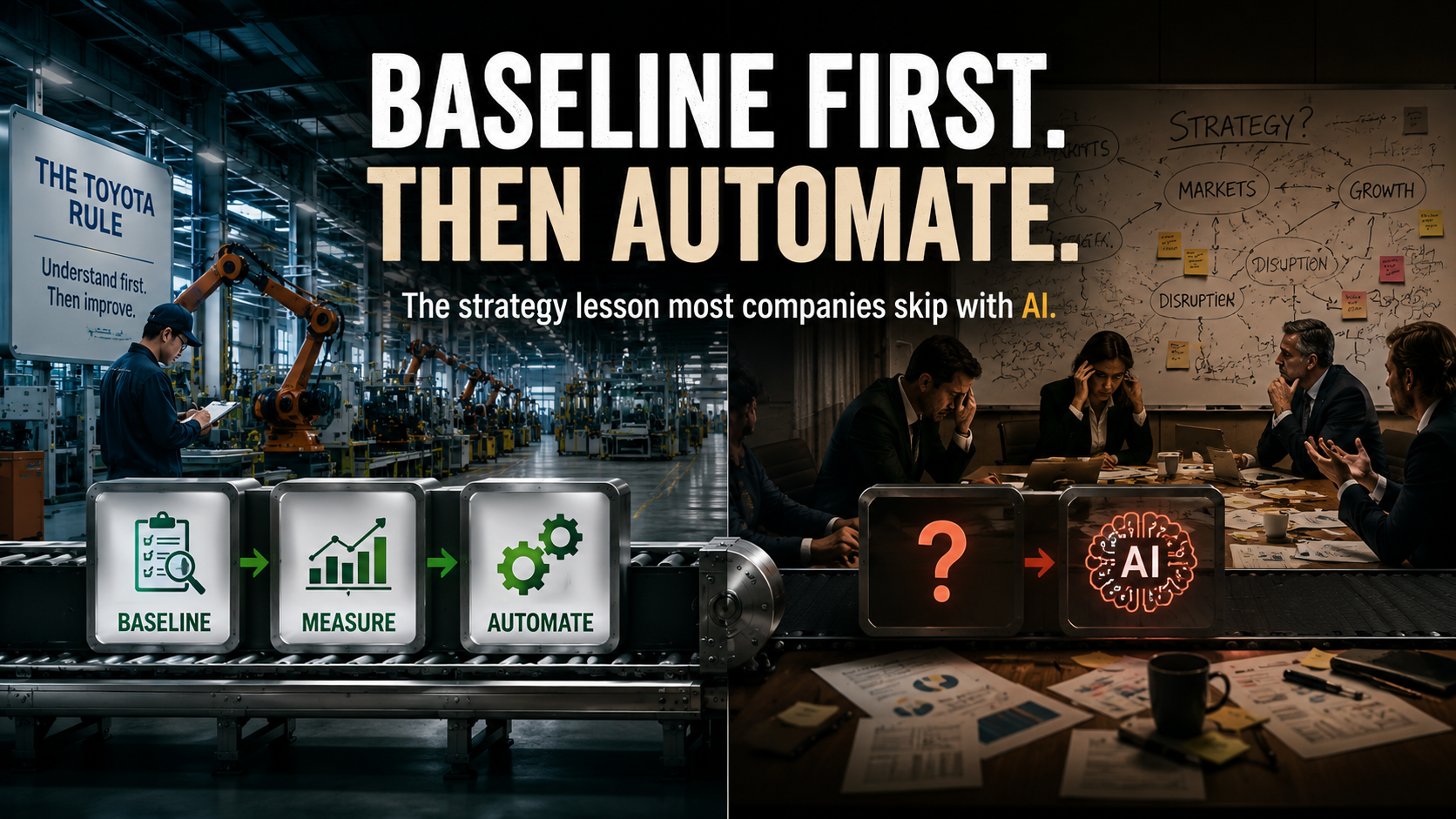
Boards read rushed AI rollouts and frozen AI paralysis as opposite failures—recklessness versus caution. They are the same failure wearing two costumes. Both CEOs consistently skip an identical diagnostic step: mapping, stress-testing, and redesigning the underlying process before any tool gets selected. The pattern recurs across Starbucks (an AI inventory tool retired after nine months of miscounts), Ford (rehiring 350-plus engineers after automation missed veteran expertise), and IBM (tripling entry-level hiring after its HR AI stumbled on judgment calls). A widely cited MIT study found 95% of enterprise generative AI pilots failed to deliver measurable results—capital and talent weren't the constraint; diagnosis was. The deeper failure is definitional: most AI strategies are AI plans—tool lists extrapolated from competitors, with no binding constraint and no real trade-off. A genuine strategy starts by identifying which single process constraint, resolved, unlocks the most value, then works methodically backward from there. Timestamps (5) ✓ 00:00:50 Rushed AI rollouts and frozen AI paralysis aren't opposite failures—they're the same failure wearing two different costumes ✓ 00:01:49 Cause and effect separate: the department that visibly breaks isn't the one that erred—that quarter's failure originated earlier ✓ 00:03:31 MIT study found 95% of enterprise generative AI pilots failed—despite ample capital, talent, and enthusiasm at every company ✓ 00:06:01 Personal chatbot fluency misleads executives: enterprise-wide transformation isn't the same problem as a quick, confident phone answer ✓ 00:07:20 Genuine strategy identifies which single process constraint, if resolved, unlocks the most value—everything else is activity disguised as strategy


Not Rated Yet