

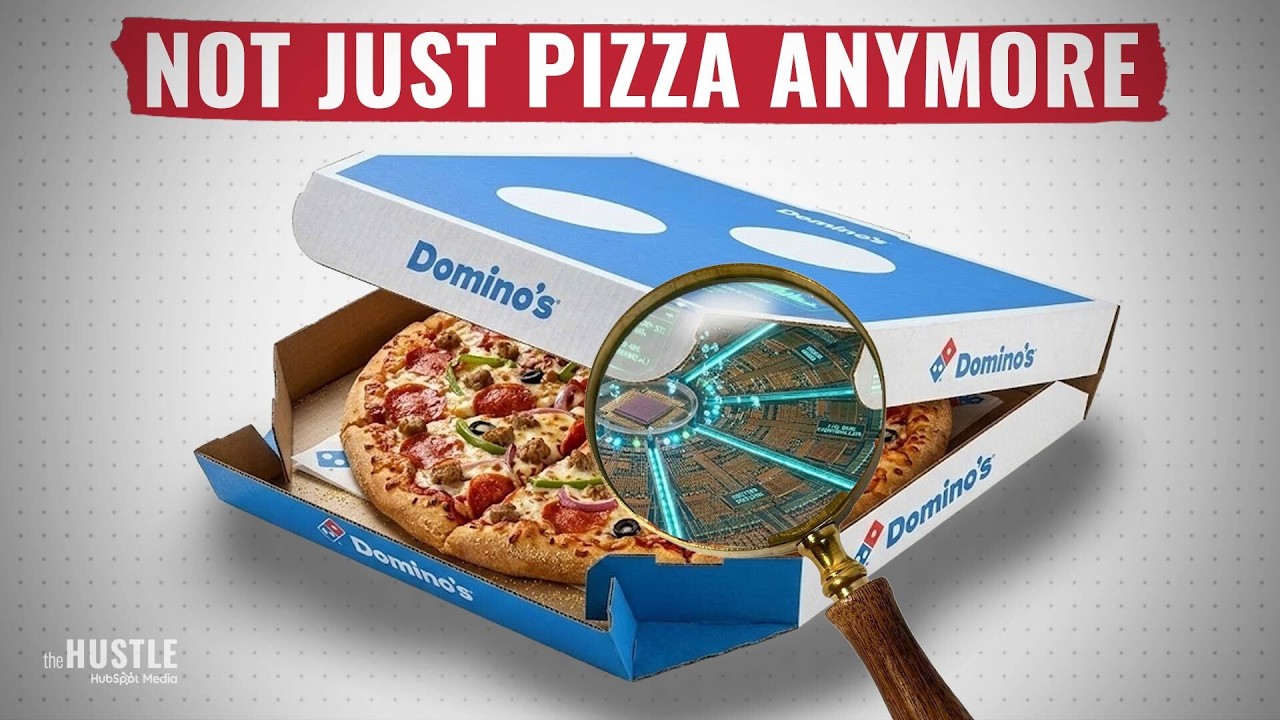
How Domino's (Secretly) Became a Tech Company
- English (US)
The most counterintuitive turnaround in QSR history wasn't built on better pizza—it was built on broadcasting that the pizza was terrible. Domino's outperformed Google, Amazon, and Apple during the 2010s after ranking last in taste alongside Chuck E. Cheese. The mechanism reframes what corporate transparency can accomplish strategically.
Strategy: How Disney Leveraged Adults' Nostalgia
- English (US)
Disney didn't accidentally create fanatics who spend $35,000 on 10-day vacations—they engineered them over 40 years using principles borrowed from religion and psychology. This investigation reveals how Michael Eisner's failed "age decompression" strategy evolved into Bob Iger's acquisition spree, transforming Disney from entertainment company into emotional monopoly.
Huawei's big comeback, explained
**Why Tech Geopolitics Strategists Rewatch This 20-Minute Huawei Sanction Survival** Huawei fought "more and bigger sanctions than any other major company in recent history" yet revenues "basically back to previous 2020 peak when sanctions applied," profits "never dipped below 5% margin." Regained "#1 spot in China, world's largest phone market"—premium segment "Harmony has more than twice as much market share as all Android brands combined." Built Harmony OS Next replacing Android and achieved "China's first mass-produced 7nanometer class chip."
When the Underdog Finally Wins: The Rebirth of AMD
**Why Semiconductor Strategists Rewatch This 13-Minute AMD Underdog Comeback Analysis** NVIDIA captured 94% GPU market share Q2 2025 (up from 88% prior year) while AMD slipped to 6%—"AMD wasn't even real AI competitor, more of footnote." Yet OpenAI just signed massive deal potentially reaching $100B with AMD not NVIDIA, including "warrant for up to 160 million shares of AMD common stock, up to 10% of AMD."
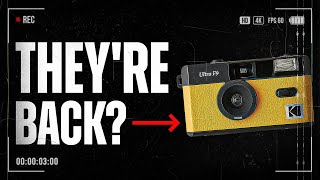
From Bankruptcy to Billions : The Rebirth of Kodak
**Why Corporate Turnaround Strategists Rewatch This 14-Minute Kodak Bankruptcy Resurrection** Kodak dominated 90% camera market as $30B company, invented digital camera but "failed to capitalise on it"—filed bankruptcy 2013 with $6.75B liabilities. Eliminated $4.1B debt through asset sales including "$650 million to UK Kodak Pension Plan" dropping remaining $2.1B claim, but "still had over $2.5B left over, still lot of debt."

Fixing Baseball's Attendance Problem
**Why Sports Business Strategists Rewatch This 6-Minute MLB Revenue Model Breakdown** - MLB attendance collapsed post-COVID despite "bounce back hopes"—trends indicate continued decline. Core problem: 162-game season creates cost structure where "April/March crowds just don't justify means being put into it, only 8-12 thousand fans in attendance in half these ballparks." Yet games continue "for TV" despite cable infrastructure collapsing.

BMW - The Rise and Fall...And Rise Again
**Why This 11-Minute BMW Story Is Required Viewing for M&A Strategists** Most people know BMW as "the ultimate driving machine." Few know the company almost disappeared—multiple times—and that one acquisition nearly destroyed everything.
Build A Bear Workshop - Why They're Successful
How does a company go from losing $48 million to making $48 million in the exact same amount—while outperforming Nvidia's stock returns? This is Build-A-Bear's resurrection story, and it's a masterclass in turnaround strategy.
The Rise and Fall of ESPN: Inside DIsney's $11b Meltdown
This video chronicles the dramatic evolution of **ESPN**, from its scrappy 1979 founding as the first 24/7 sports network to its peak dominance as a "massive money printing machine," and its subsequent decline in the face of cord-cutting and escalating content costs.

Verizon - Bigger Than You Know
This video explores the complex corporate history of **Verizon Communications**, detailing how it grew into one of the world's largest telecommunications giants with over 150 million wireless customers in the US. The first half of the video focuses on the intricate series of mergers that led to Verizon's formation on June 30, 2000, tracing its roots back to the 1984 breakup of AT&T (Ma Bell) and the subsequent merging of two "Baby Bells," NYNEX and Bell Atlantic, and the later merger with GTE.
The Streaming Wars
The Streaming Wars are here! Two decades ago, the market hardly existed; now, streaming has become the most important part of the media business, posing a major threat to movie theaters and traditional television.