

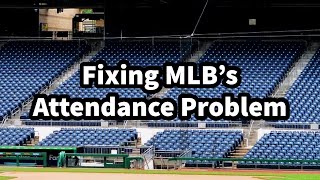
Fixing Baseball's Attendance Problem
Why Sports Business Strategists Rewatch This 6-Minute MLB Revenue Model Breakdown MLB attendance collapsed post-COVID despite "bounce back hopes"—trends indicate continued decline. Core problem: 162-game season creates cost structure where "April/March crowds just don't justify means being put into it, only 8-12 thousand fans in attendance in half these ballparks." Yet games continue "for TV" despite cable infrastructure collapsing. The cable bundle revelation at 02:18 exposes dying revenue model: "Sports made money very long time getting lot of people that don't watch it to pay via bundles on cable bill, so many dropped cable it's really just dead medium." Rights deals "keep going up and up" with "no adjustment for loss in viewership, loss in cable subscribers, loss in attendance." The NFL scarcity comparison at 03:57 reveals structural advantage: "Part of why NFL thrives so well is games mean a lot—having 14 fewer games wouldn't make games worth way more but would make each one worth a little more." Proposal: reduce to 148 games, eliminate coldest months, concentrate attendance in viable weather periods. Strategic lesson: when primary revenue model (cable bundles) collapses, maintaining supply levels (162 games) without demand creates unsustainable cost structure requiring complete business model redesign. 5 Key Timestamps: [01:13] The Season Length Cost Structure Problem – 162-game season creates unsustainable economics: "games cost money to put on, not free to have as many games as they want, more games means employees, players, lot of expense." April/March games draw "only 8-12 thousand fans in attendance in half these ballparks"—costs exceed revenue but "they're doing it for TV" despite collapsing cable model justifying reduction to 148 games [02:18] The Cable Bundle Revenue Model Collapse – "Sports made money very long time getting lot of people that don't watch it to pay for it via bundles on cable bill, at this point so many people dropped cable it's really just dead medium to get money anymore." Rights deals "keep going up and up and up with no adjustment for loss in viewership, loss in cable subscribers, loss in attendance"—economic foundation disappeared while cost commitments escalated [03:26] The Weather-Driven Attendance Concentration Strategy – Reducing games "could get rid of all games in coldest part of year in early April and late March, cause more people go to games during warmer times—just moving attendance from games early in year to more crowded games when weather's nice." Not necessarily huge gate revenue hit "except maybe select few teams that sell out nearly every game or get close to selling out" [03:57] The NFL Scarcity Value Comparison – "Part of why NFL thrives so well is games mean a lot—having 14 fewer games wouldn't make games worth way more but would make each one worth a little more." Scarcity economics create per-game value premium that 162-game glut prevents—structural oversupply dilutes individual game significance reducing willingness to pay premium prices [04:29] The Value Proposition Erosion Pattern – "Used to be you went to gate to avoid fees, now can't buy tickets at gate and even if you get them at team shop before game they still charge you fees—completely ridiculous." Combined with "margins on beer or food gotten so crazy it just starts to turn people away"—incremental revenue extraction destroyed core value proposition making "game where it's just not value to go anymore, league has to adjust to changes and trends of revenue or just going to keep declining"





Not Rated Yet