

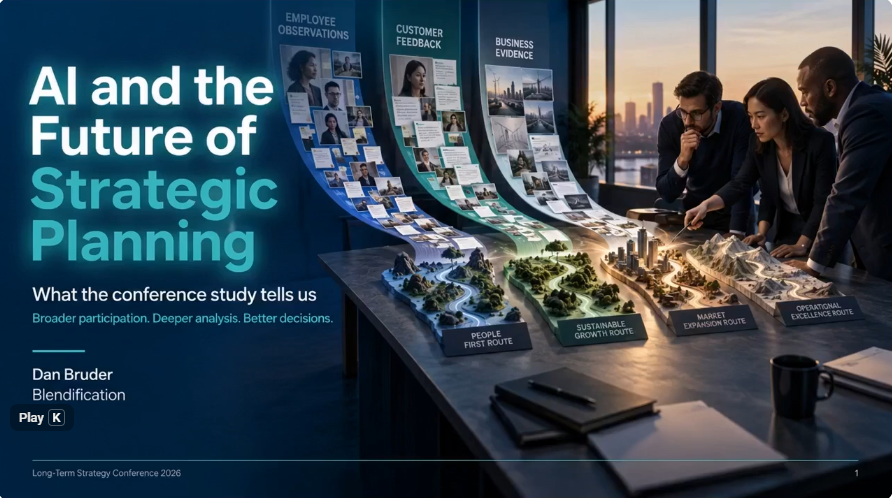
AI and the Future of Strategic Planning Report
How is AI changing strategic planning, and what does that mean for the people responsible for setting direction? Dan Bruder shares findings from the Long-Term Strategy Conference 2026 study, exploring how strategy professionals use AI, where they see value, and what concerns them. Participants describe faster research and analysis while raising questions about generic strategies, missing perspectives, and the need for human judgment.

LTSP26 — Pre-Conference AI Survey with Fusion
- English (US)
A pre-conference survey that isn't a survey: instead of forcing strategy leaders into predetermined answer choices, Blendification built Fusion, an AI teammate that conducts a live, adaptive conversation about how AI is actually affecting strategy work today.

Welcome to LTSP26 — Conference Walkthrough & Platform Orientation
- English (US)
Registering was the easy part. The hard part is what happens between now and midnight Thursday, when the entire Long Term Strategy Conference 2026 closes. Francis Wade's ask before you close this video: pick exactly one live session, one persona, one video — not everything.
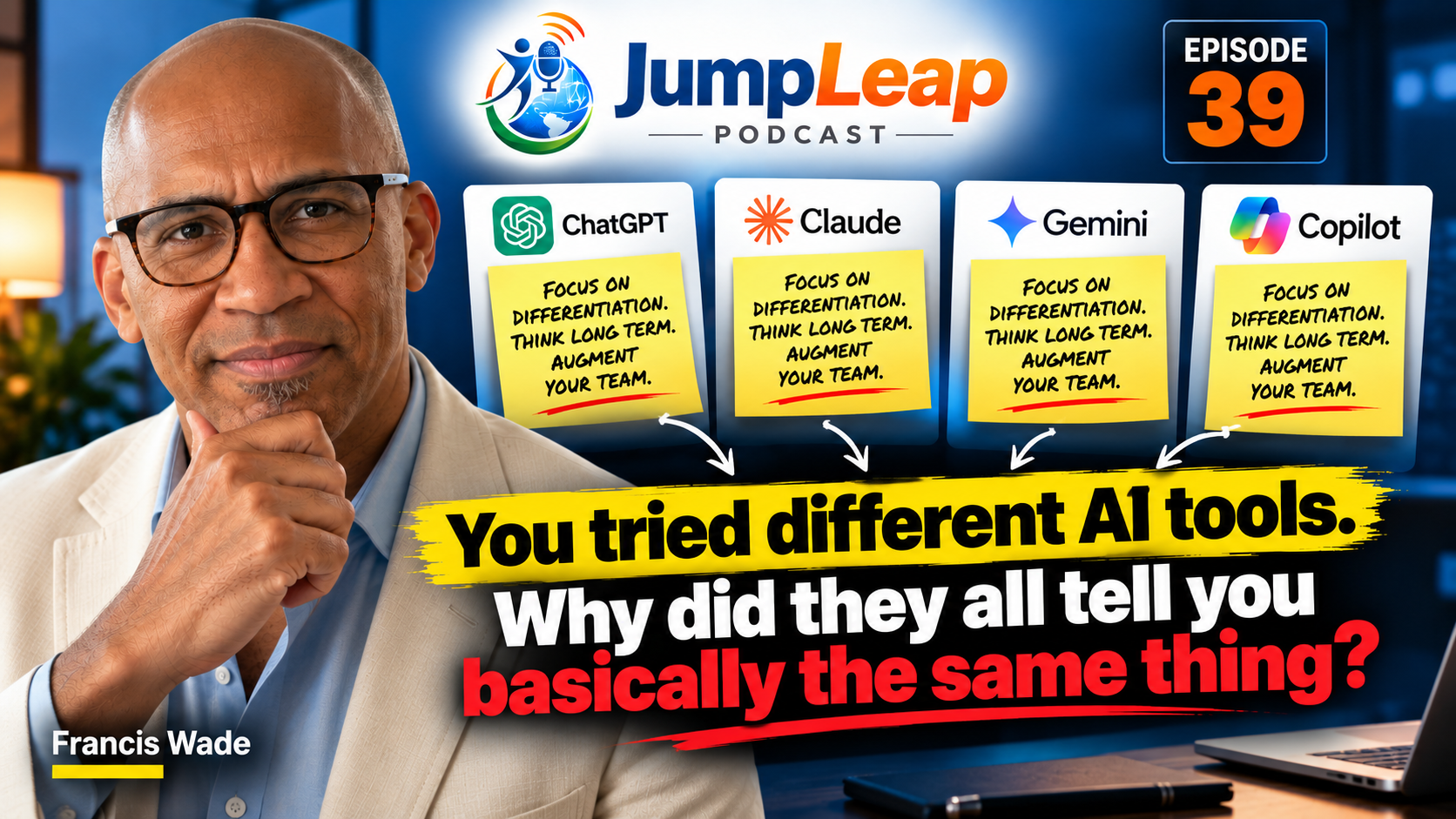
Ep 39 "Trendslop": Why AI Keeps Giving Strategists the Same Answer
- English (US)
A chief strategy officer asks ChatGPT, Claude, and Gemini the same strategic question before his board retreat. Different phrasing, identical conclusions — and no way to tell if any of it is actually good advice.
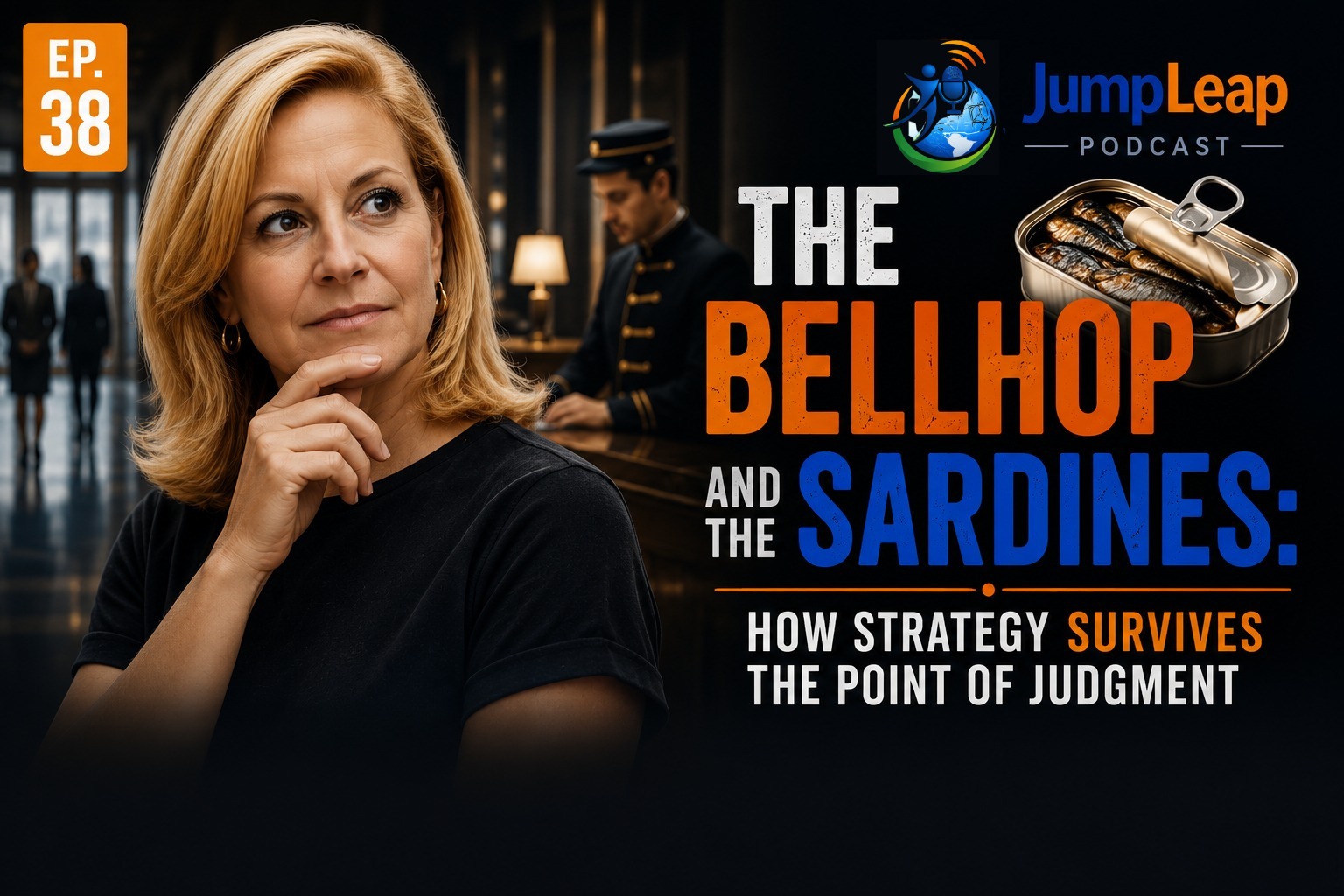
Ep 38 - The Bellhop and the Sardines
Most strategy activation programs fail for a counterintuitive reason: employees don't lack information, they lack rehearsed judgment. Town halls, PDFs, and cascaded briefings transmit content, but the moment that matters — an employee facing an ambiguous tradeoff with no manager present — receives no training at all.
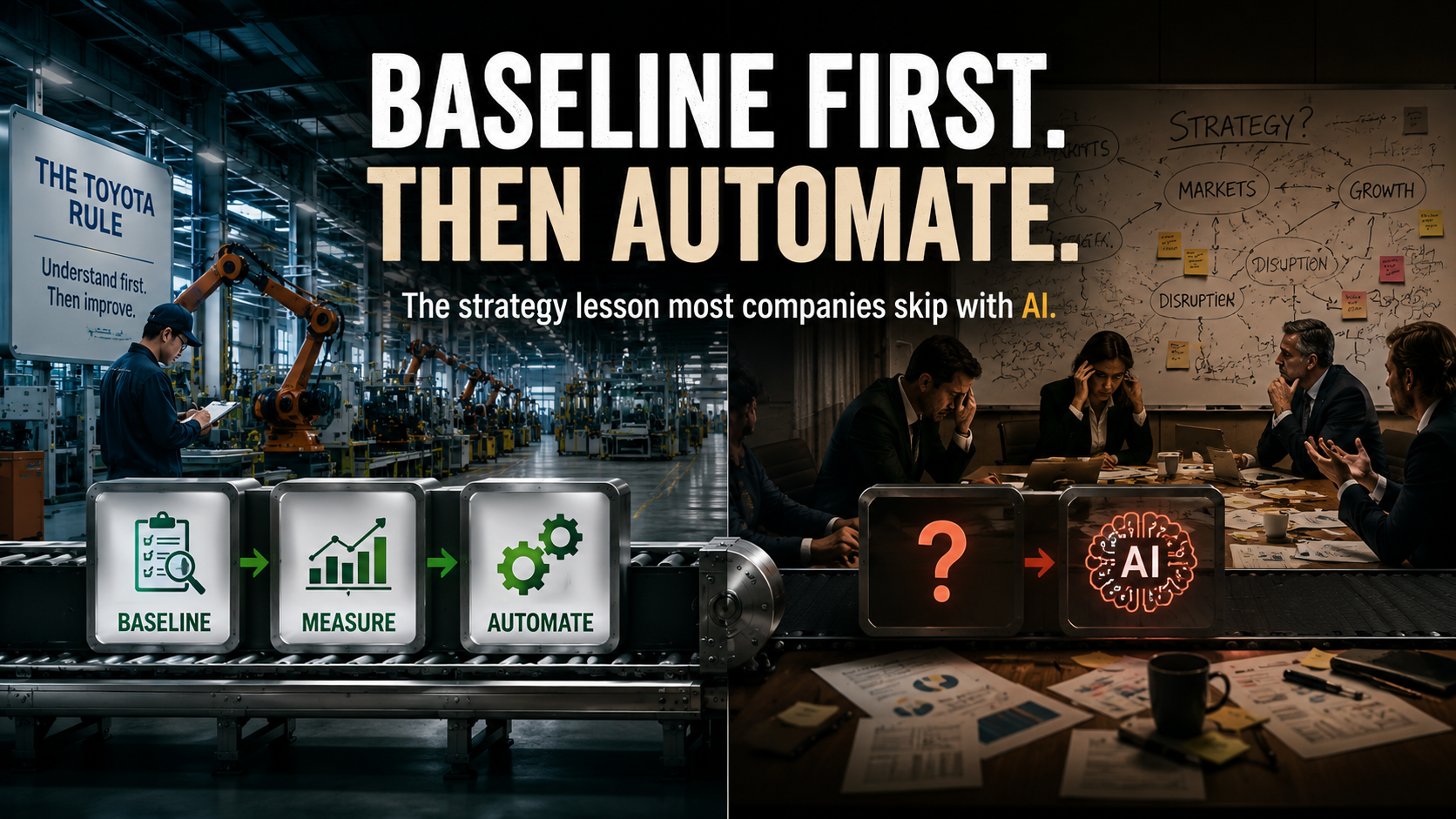
Testing AI in Corporate Strategy
McKinsey told AT&T in the 1980s that global mobile subscribers would top 900,000 by 2000. The actual number was 100 million – a miss by two orders of magnitude. That forecast was polished, confident, and built entirely on past data: trendslop, long before AI. Today's LLMs produce the same flaw on demand: confident output that sounds insightful until you inspect it.
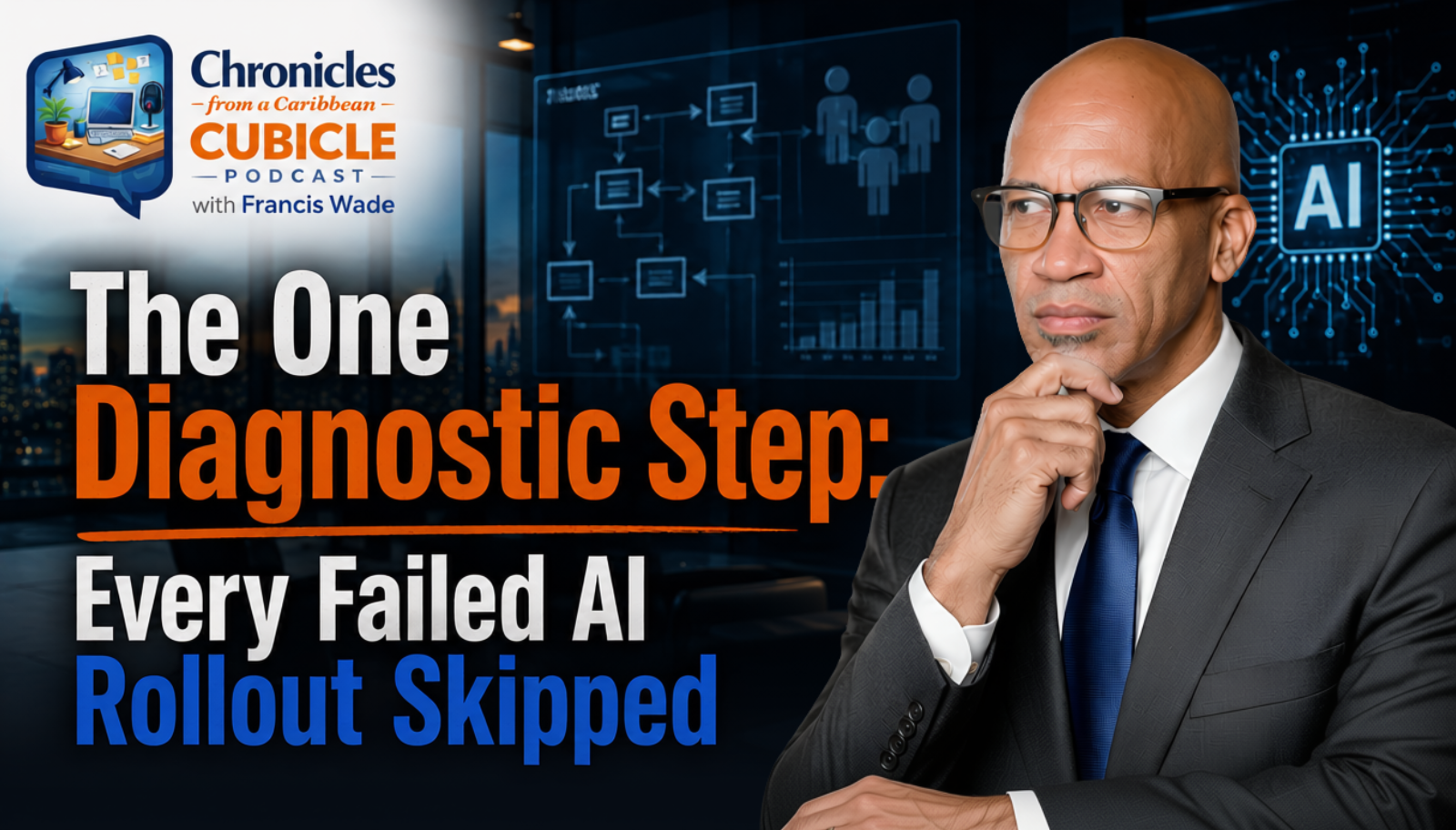
The One Diagnostic Step: Every Failed AI Rollout Skipped
Boards read rushed AI rollouts and frozen AI paralysis as opposite failures—recklessness versus caution. They are the same failure wearing two costumes. Both CEOs consistently skip an identical diagnostic step: mapping, stress-testing, and redesigning the underlying process before any tool gets selected.