

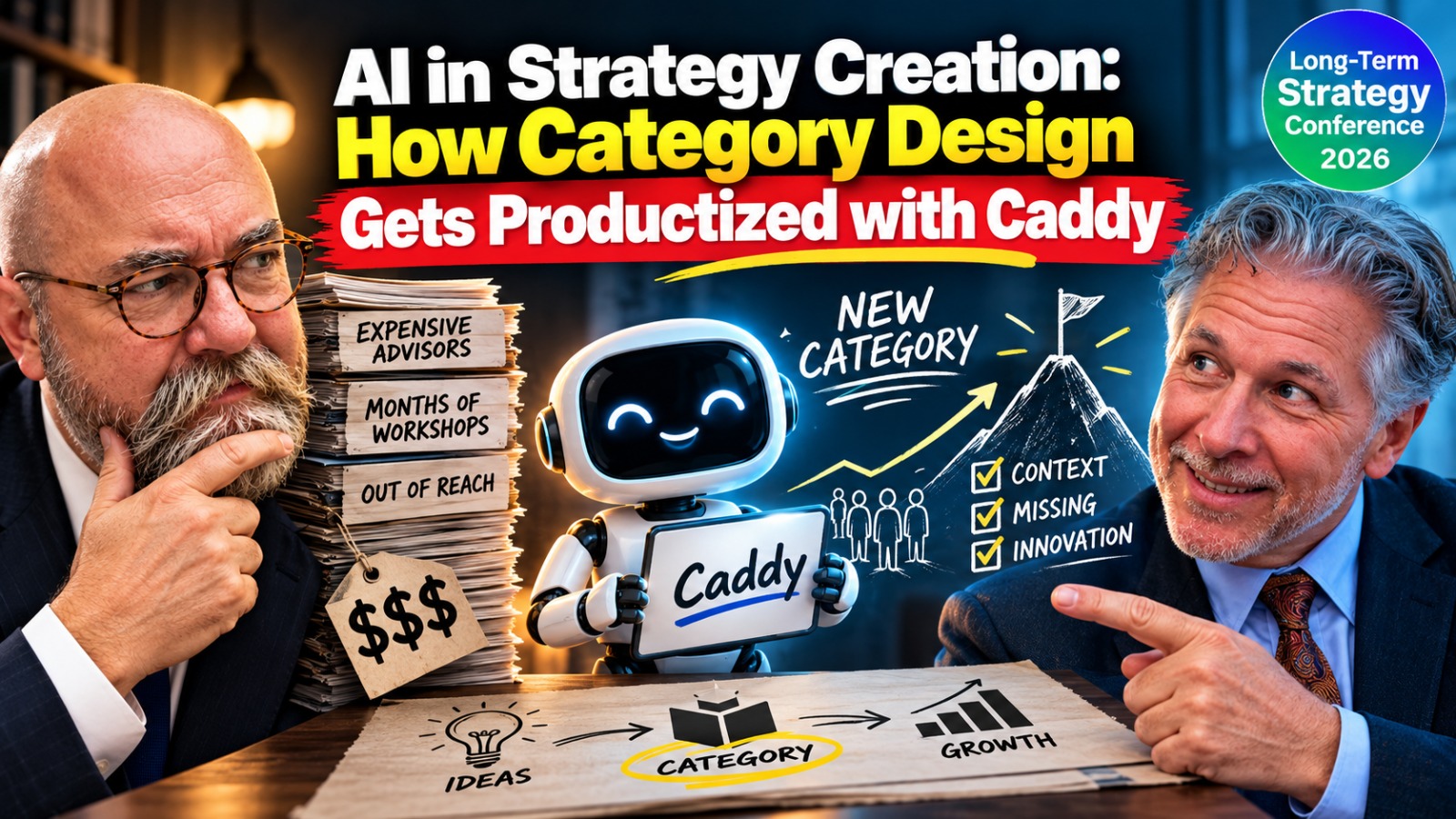
Why Category Design Was Too Expensive — Until AI Changed the Game w/ Mike Damphousse and Kevin Maney
Most companies know category design could transform their strategy. Almost none can afford the traditional way of doing it — outside advisors, six-figure fees, months of workshops. Kevin Maney and Mike Damphousse are changing that math with AI. Caddy, their interactive AI persona, runs teams through the Category Creation Formula — context, missing piece, innovation — using guided questions to surface whether a real category opportunity exists, then names the "category villain" to sharpen the problem. Built by testing first with ChatGPT before rearchitecting in Claude, Caddy challenges weak answers rather than collecting them passively, functioning like a Zoom-attending facilitator instead of a static survey. Applied to a real test case — the volunteer-run Caribbean HR Forum needing a new category for its next chapter — the process plays out live. The bigger deliverable isn't the AI output itself: category design demands team consensus, and that shared language is what actually gets used. Timestamps: 00:00:34 Category design means creating and dominating a brand-new market category entirely, with Netflix building streaming as the classic example 00:06:08 Smaller organizations have historically been priced out of category design because it required senior advisors and multi-month engagements 00:15:02 The Category Creation Formula, context plus missing plus innovation, helps identify whether a real category opportunity actually exists 00:18:29 Caddy pushes teams to name the specific "category villain" they're fighting against, sharpening a vague opportunity into a real problem 00:23:01 Category design can't be one person's exercise handed to everyone else; consensus itself is the core deliverable of the process
- English (US)








Not Rated Yet