
Introduction | Why AI Strategy Advice Sounds Smart but Still Misleads Core #1
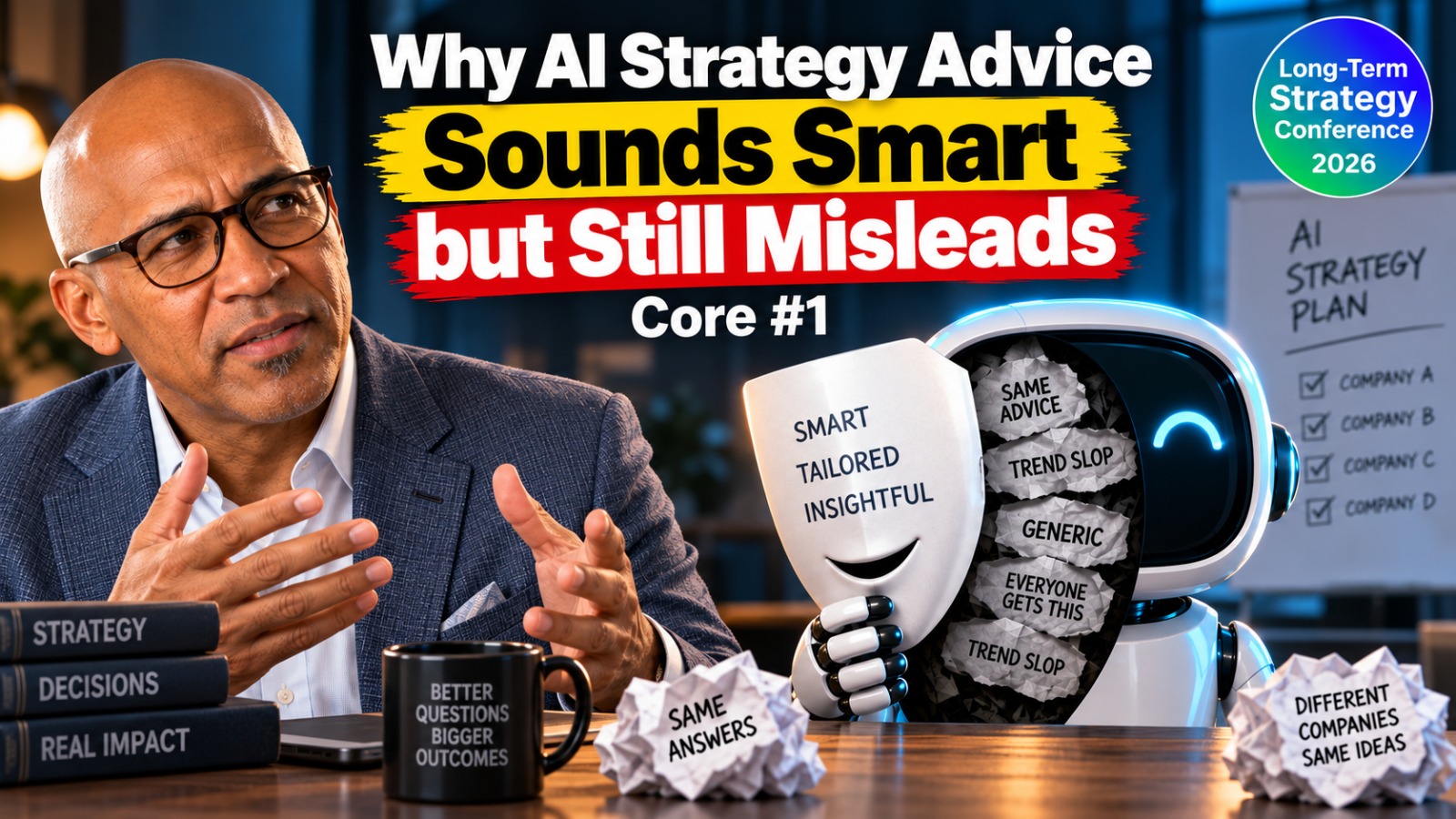
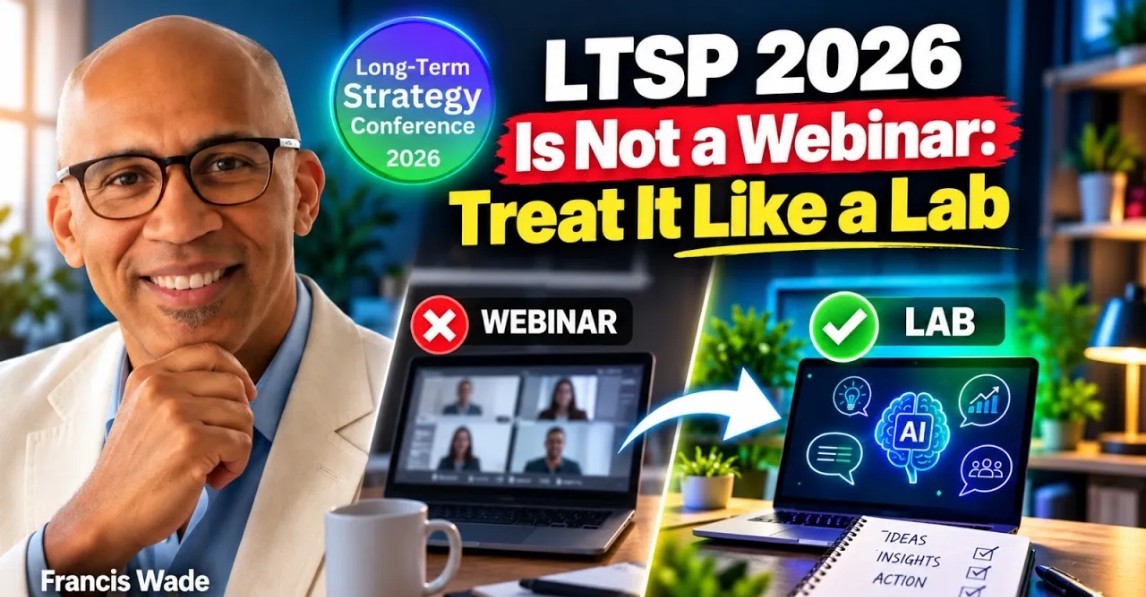
AI can make strategy feel smarter in seconds—and flood it with polished nonsense that sounds tailored while matching every competitor's answer word for word. Francis Wade opens the Long Term Strategy Conference 2026 by naming the problem: 'trendslop'. Trust built using AI for email and research doesn't transfer to strategy, where errors stay invisible for months. McKinsey found 80% of individuals report AI productivity gains, yet only 37% of organizations see positive impact—proof the problem is structural, not personal. Better prompts, more documents, and swapping models all fail because LLMs converge on popular answers regardless of context, pushing teams toward one of two failure modes: blind trust or total rejection. The fix is neither extreme—it's workflow thinking. This introduction sets up a five-part series moving from diagnosis through Angelo Romasanta's research to the Endpoint Method and future-back thinking, the practical architecture for using AI without losing strategic judgment. Timestamps: 00:00:50 Francis Wade names the core problem "trend slop": AI producing confident, tailored-sounding advice that converges identically across unrelated companies 00:07:35 McKinsey found 80% of individuals report AI productivity gains, yet only 37% of organizations see any positive impact at all 00:12:19 Leaders drift toward two failure modes with AI in strategy: blind trust in polished output, or total defensive rejection 00:16:13 A company that deployed AI without process discipline created a costly, system-wide mess still cited as a cautionary example 00:21:21 The Endpoint Method's six stages show exactly where AI helps generation and where human judgment must take over commitment
- English (US)


Not Rated Yet