
The Hardest Part of Strategy Is Thinking Backward From the Future Core #5
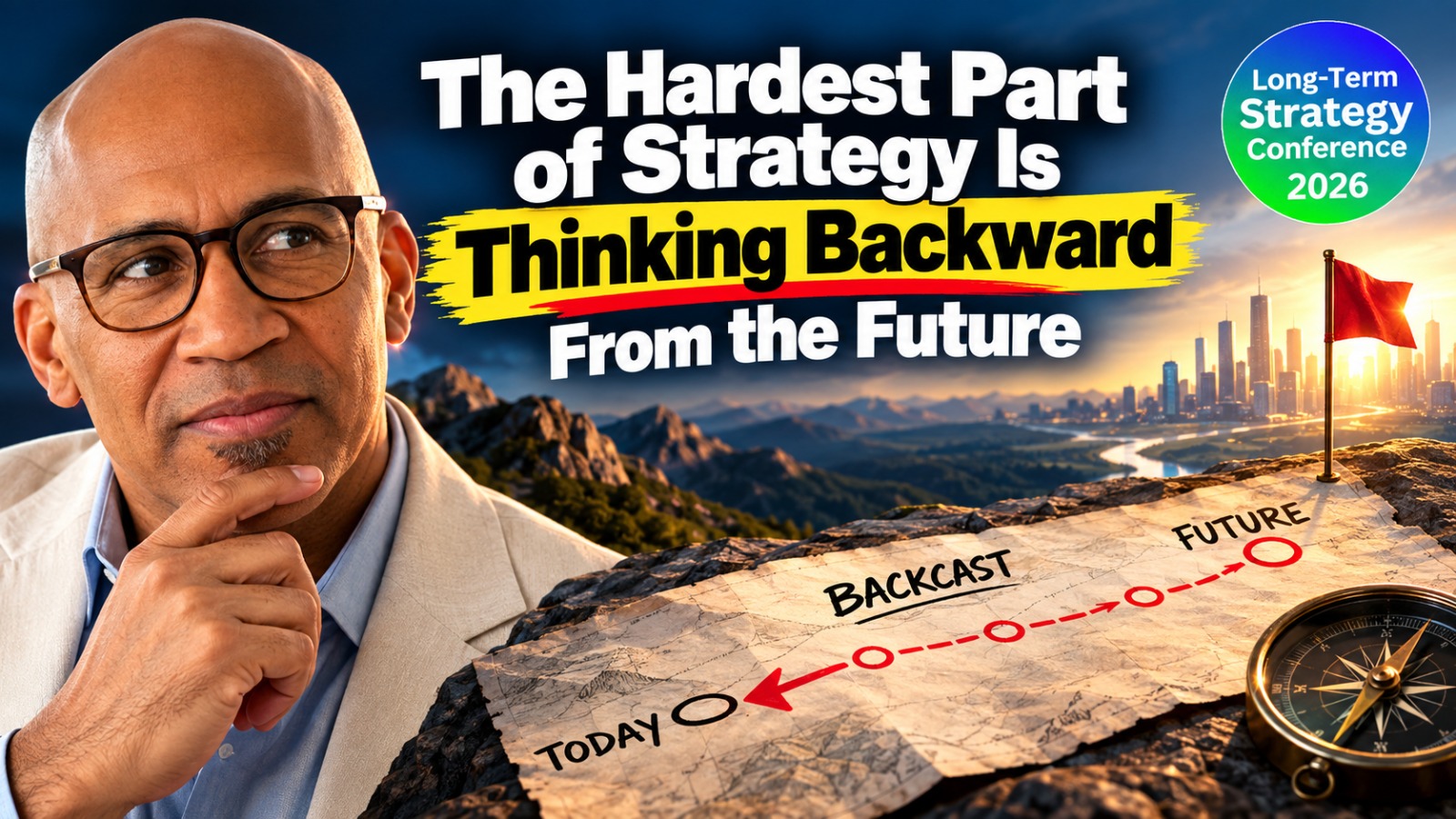
Most strategy plans fail at the exact moment teams stop thinking backward. Francis Wade argues backcasting—stage five of the Endpoint Method—is the hardest step, and handing it to AI turns real strategy into polished planning theater. Discomfort while reasoning backward from a chosen future is a green flag, not a warning: it means the team is confronting real dependencies instead of generating a pretty, evenly spaced calendar. A bank ownership case shows the stakes directly—backcasting surfaced an uncomfortable moral and operational choice that required real sacrifice, protecting customers at the cost of leadership blowback, rather than the wishful timeline an AI model would happily produce. Skipping prerequisite testing is how plans collapse a year later, once the hidden dependency finally surfaces. The fix requires a small, knowledgeable leadership group working through the discomfort directly—internal business knowledge outweighs outside advice, and AI or consultants can assist, but cannot replace that judgment. Timestamps: 00:01:24 Discomfort while reasoning backward from a chosen future is a green flag, not a warning sign that the exercise is broken 00:04:21 Planning theater is what happens when AI produces a pretty, evenly spaced calendar instead of a real, dependency-tested backcast 00:09:46 A bank ownership case shows backcasting surfacing a genuine moral and operational choice, not just a scheduling exercise 00:10:23 Risky action protected customers but caused real leadership blowback, proving the right backcasted path sometimes demands real sacrifice 00:17:11 Internal business knowledge matters more than outside consultants or AI, which can assist backcasting but cannot replace leadership judgment
- English (US)






Not Rated Yet