
What is Strategy? It's a Lot Easier Than You Think
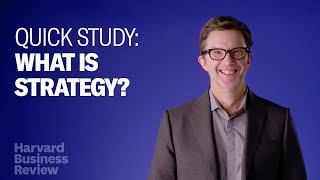
Strategy doesn't have to be a mystery reserved for senior executives. This video, based on a simple economic model, argues that strategy is fundamentally a plan to create value. It introduces the concept of the Value Stick, a straightforward framework for understanding how a company creates value by optimizing two key factors: Willingness to Pay (WTP): The most a customer would pay. Willingness to Sell (WTS): The least an employee would accept to work for you. The total value created (WTP minus WTS) is then split three ways: to customers, to employees, and to the company's margin. Learn the three specific buckets for raising WTP and the critical difference between increasing compensation versus making a job better to lower WTS. The talk concludes with a powerful case study on how Best Buy used this exact framework to turn around its business and achieve record profitability. YouTube Timeline [00:00] Defining Strategy: Strategy is a simple plan to create value for customers, employees, and suppliers. Financials are the result of strategy, not the starting point. [01:07] The Value Stick Model: Introduction of the "Value Stick" figure, which illustrates total value as the difference between Willingness to Pay (WTP) and Willingness to Sell (WTS). [01:34] Understanding WTP: WTP is the maximum a customer would pay. Value created for the customer is the difference between WTP and the actual price. [02:37] Understanding WTS: WTS is the minimum compensation an employee would accept. Value created for the employee is the difference between their actual compensation and WTS (a measure of job quality). [03:15] The Value Split: Total value created is split three ways: to customers (WTP - Price), to employees (Compensation - WTS), and to the company (The Middle Wedge/Margin). [03:48] Three Ways to Increase WTP: Quality of the product or service. Complements (e.g., razors and blades). Network Effects (the more popular the product, the higher the WTP). [05:32] Lowering WTS: Making the job a better job (e.g., better training, flexible working) lowers WTS and creates value, whereas simply paying more money only redistributes value. [06:18] Case Study: Best Buy's Strategy: How CEO Hubert Joly turned the company around by applying the Value Stick framework. [07:06] Increasing WTP: Used stores as local warehouses to provide better shipping times. [07:32] Lowering WTS (for Vendors): Created "store-in-a-store" concepts for companies like Microsoft and Samsung, lowering the cost for vendors compared to building freestanding stores. [08:01] Lowering WTS (for Employees): Dedicated employees to a single "store-in-a-store," increasing their expertise, job satisfaction, and engagement. [08:42] Best Buy's Results: By increasing WTP and lowering WTS, Best Buy reduced pricing pressure and lowered costs, moving from a billion-dollar loss to a 20%+ return on investor capital.
Not Rated Yet