


The Walt Disney Company: The most successful enterprise for monetizing human nostalgia (Audio)
4 h : 32 min English (US)
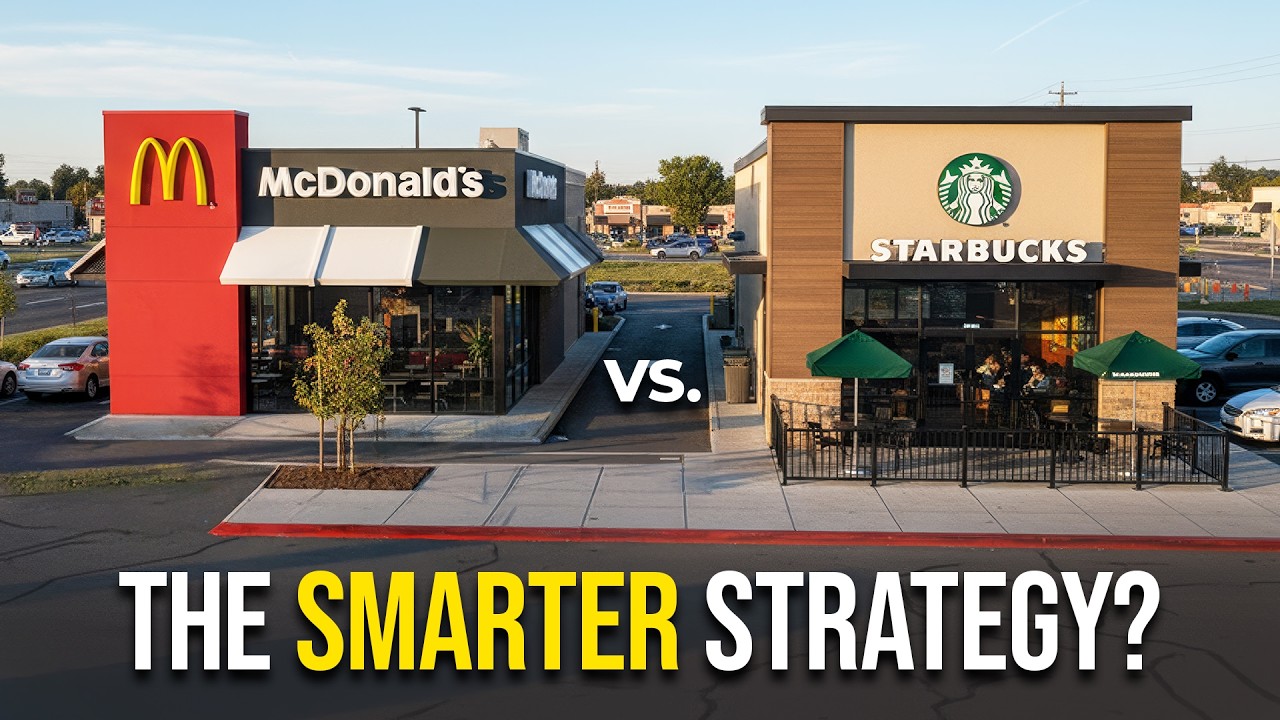
McDonald's real estate strategy isn't universally optimal—it's contextually brilliant. The paradox: Howard Schultz deliberately rejected Ray Kroc's proven billion-dollar playbook despite identical expansion ambitions, yet both built 40,000+ location empires. The divergence reveals fundamental strategic trade-offs in capital allocation and risk architecture. McDonald's real estate ownership generates 8% property returns with inflation protection and franchisee control—optimizing for long-term stability and predictable cash flows from rent plus royalties. Starbucks's asset-light leasing model enables 18% operating returns on equipment and buildouts, funding expansion at twice McDonald's pace while maintaining location flexibility across landlord-controlled venues (malls, airports, high streets). Chicago's 1987 entry demonstrates the model's resilience: two years of operating losses were sustainable precisely because capital wasn't locked in property debt, enabling Schultz to maintain quality investment through the awareness-building period. The strategic implication: optimal models depend on product economics, expansion velocity requirements, and return profile preferences. Great strategies aren't universal—they're situationally designed. Both approaches created investor-grade assets through opposite architectural choices. 5 Timestamps 00:02:13 Kroc's model shift: franchisee 1.9% sales commission couldn't build empire—owning land and leasing back created upfront revenue stream plus expansion capital 00:04:47 Starbucks investor question drove strategy: commodity coffee requires first-mover advantage in each market before Maxwell House copies—speed trumped property ownership 00:06:14 Chicago 1987-1990 case: two-year operating losses sustainable because leasing avoided property debt service, enabling continued quality investment during market-building phase 00:08:13 Return profile divergence: Starbucks 18% operating returns on equipment/buildouts versus McDonald's 8% property returns—higher percentage versus higher stability trade-off 00:12:42 Investor arbitrage: Starbucks $20/sqft rent creates more value than local tenant's $25/sqft because Fortune 500 credit strength reduces default risk premium





You have to Sign In to share the review

Not Rated Yet