
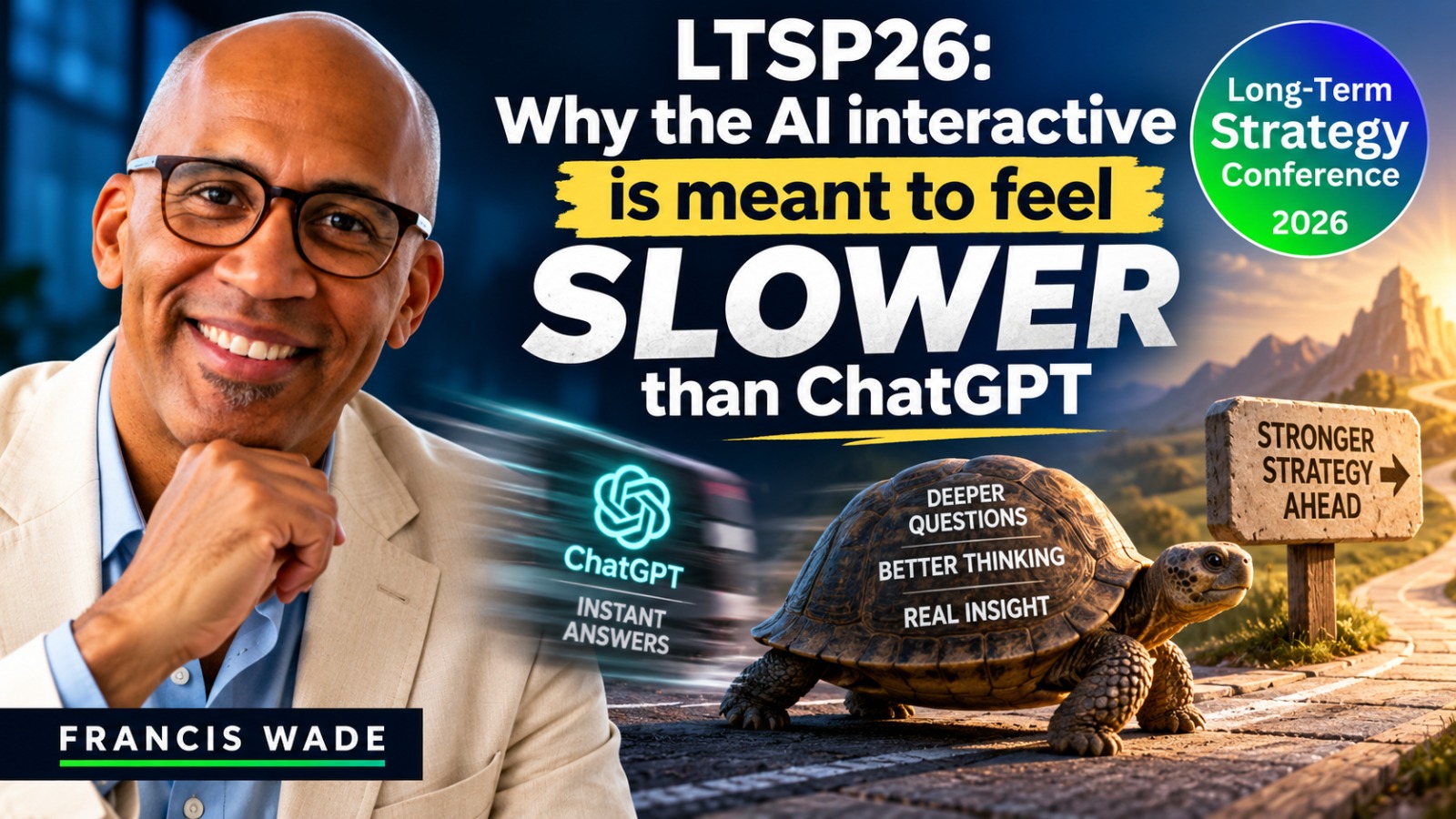
Why the AI Interactive Is Meant to Feel Slower Than ChatGPT
Marcus, a manufacturing director, quits an AI interactive after four minutes because he expected an instant answer and got follow-up questions instead. Francis Wade explains why that reaction is the wrong yardstick entirely. LTSP26's interactives are deliberately built as workflow-first working sessions, not chatbot demos — closer to Socratic coaching than search or chat. Real strategic judgment doesn't arrive in seconds, and treating a twenty-minute guided exercise like a four-minute product demo guarantees disappointment before the tool has done anything wrong. A personal coaching story reframes impatience itself as useful information rather than proof of failure: shallow answers simply produce shallow follow-up questions, and rushing past discomfort is what breaks the exercise, not the exercise itself. The practical fix: set a realistic time limit upfront, match your expectations to the category of tool you're using, and judge the value only at the end of the committed block — not four minutes in. Timestamps: 00:01:52 Marcus, a manufacturing director, quits the AI interactive after four minutes because he expected an instant answer, not follow-up questions 00:04:00 Real strategic judgment doesn't arrive in seconds; these sessions are built as workflow-first working sessions, not quick chatbot demos 00:07:49 A personal coaching story reframes impatience as useful information about the process, not proof that the tool is broken 00:10:24 Socratic questioning, not instant search, is the right mental model for judging whether an AI interactive session is working 00:14:12 AI changes what strategic work is possible to achieve, but it does not change how long real strategic thinking actually takes
- English (US)








Not Rated Yet