
Why Most Strategy Frameworks Fail in the AI Age Core Core #4
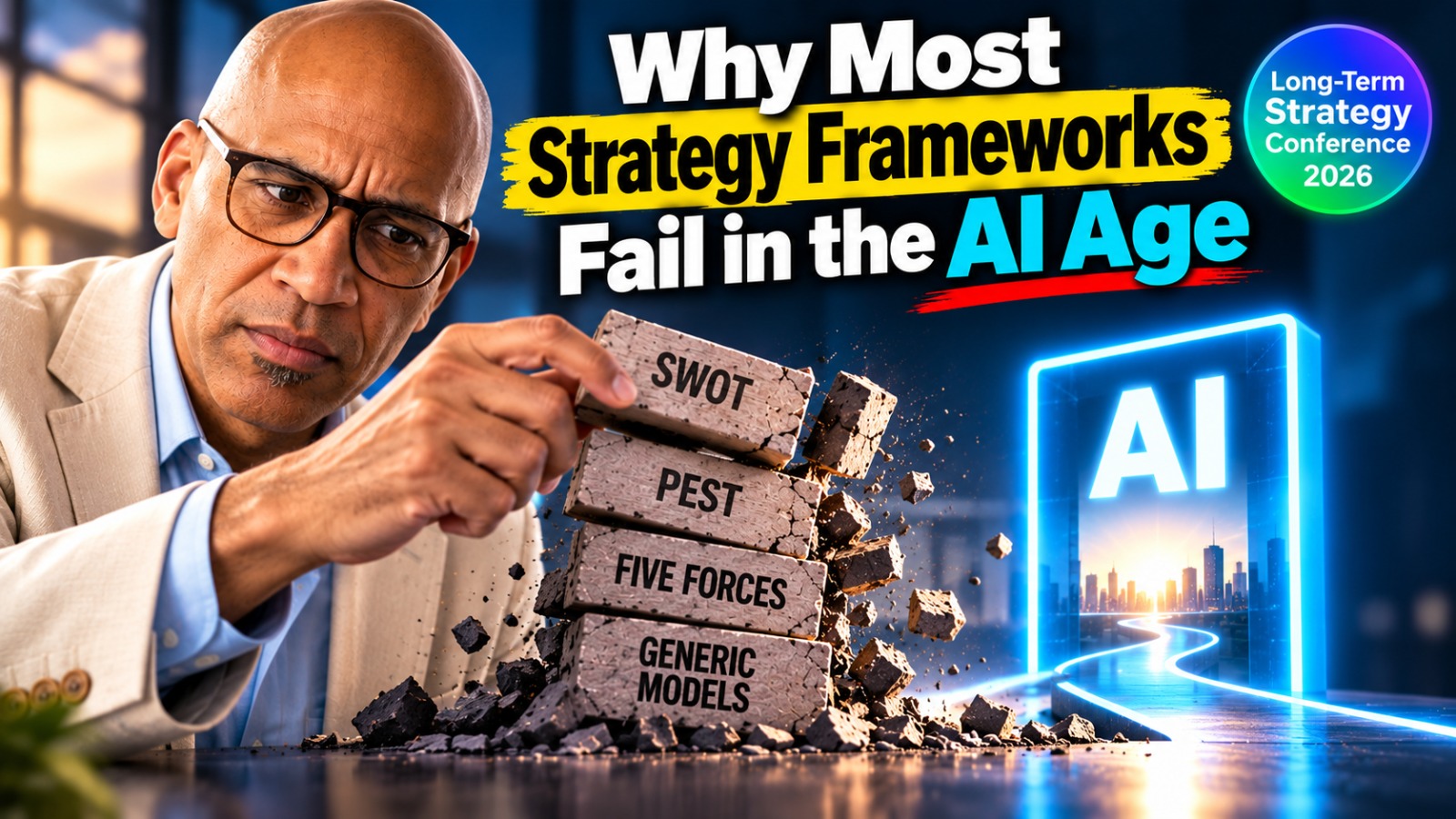
Most companies are asking the wrong AI question. It's not whether AI belongs in strategy—it's where, and why most planning processes break down before they ever get useful. Francis Wade argues classic frameworks like SWOT and Five Forces are lenses, not workflows. The Endpoint Method replaces the generic five-box summary with six transformations: Snapshot pulls teams out of siloed thinking; Target Year forces a real long-term commitment; Outcome Generation opens divergent possibilities; Outcome Selection makes trade-offs measurable; the Merlin Chart backcasts ambition into a credible plan; the Short-Term Plan converts it into project ownership. A Jamaican cocoa farm example shows the real cost of skipping the target-year stage: short-term fixes that quietly sacrifice decades of value. AI proves strongest in the divergent stages—Snapshot and Outcome Generation—while convergence, trade-offs, and commitment stay firmly human. Built for strategists who need structure, not another prompt. Timestamps: 00:01:25 Classic frameworks like SWOT, PEST and Five Forces are analytical lenses, useful for understanding, but weak for designing a strategy process 00:05:48 The Endpoint Method replaces vague five-box summaries with six transformations, from siloed thinking to shared, measurable, committed outcomes 00:14:49 A 15-to-30-year snapshot horizon, built from over 60 real strategy projects, pulls teams out of siloed thinking before any target year is chosen 00:20:04 A Jamaican cocoa farm example shows the real cost of skipping the target-year stage: short-term fixes that quietly sacrifice decades of value 00:29:36 AI proves strongest in the Snapshot and Outcome Generation stages, while convergence, trade-offs, and final commitment must stay firmly human
- English (US)


Not Rated Yet