

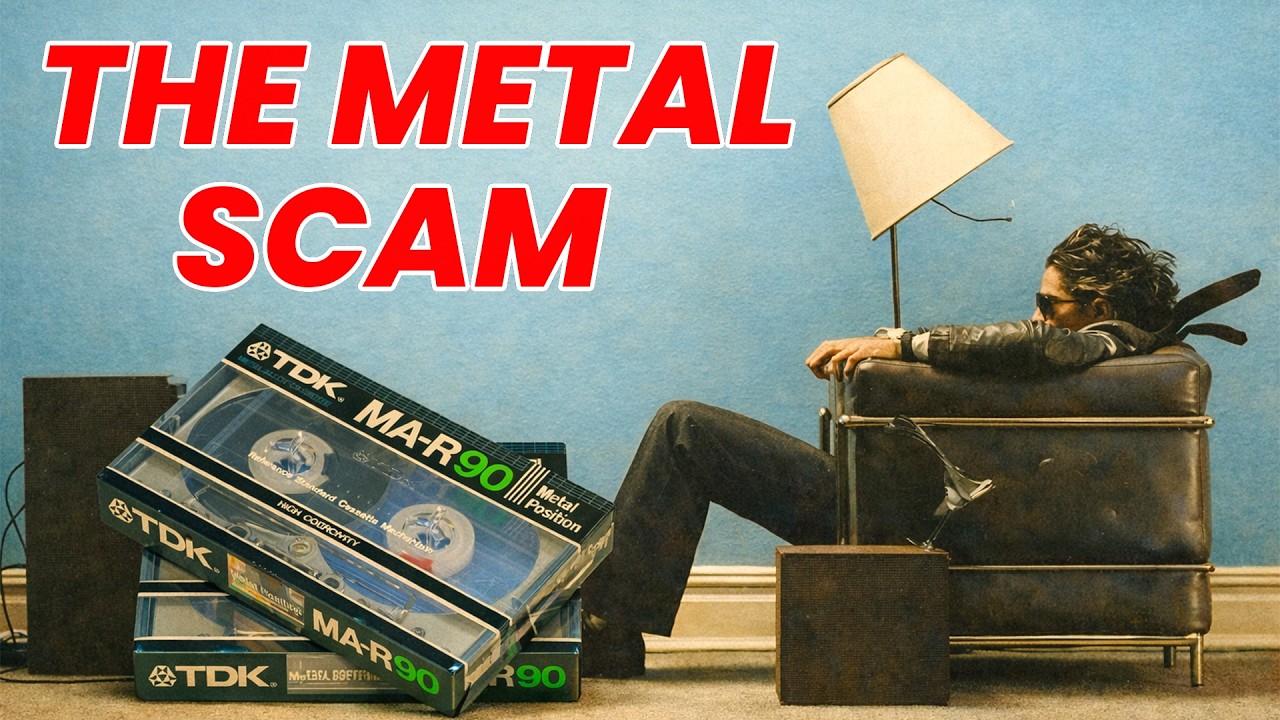
The RUTHLESS 1980s Cassette Wars That FOOLED America (And Vanished)
The cassette wars reveal a strategic lesson buried under nostalgia: consumer technology categories are won by emotional positioning, then killed by the architects of their success. TDK, Maxell, and Memorex didn't compete on tape chemistry—they sold identity. Sony, the company that made cassettes a lifestyle via the 1979 Walkman, simultaneously engineered their successor. Three mechanisms drove the cycle. Premium-tier deception: Type IV metal tapes commanded $8-10 per cassette despite requiring bias circuits absent from most consumer playback equipment—boom boxes wore "Metal" logos for marketing while the tape physically damaged underpowered heads. Emotional brand warfare: Memorex's "Is it live or is it Memorex?" ran for a decade; Maxell's blown-back-listener image, shot using a substitute makeup artist, became the decade's iconic ad. Strategic cannibalization: Sony launched the CDP-101 in 1982, sold 400,000 CD players by 1984, and overtook cassettes by 1992. The implication: incumbents who delay self-disruption forfeit the second-generation category—Sony understood this, the tape specialists did not. Timestamps: 00:02:00 Sony Walkman expected 5,000 units monthly, sold 30,000 in first two months—lifestyle product, not audio device, redefined the category. 00:04:31 Type IV metal tapes commanded $8-10 each but required bias circuits absent from most playback equipment—premium pricing for inaccessible performance. 00:05:47 Metal tapes physically degraded cheap tape heads while sounding worse than Type II chrome—category-defining product marketed against its own use case. 00:07:42 Sony sold 400,000 CD players in US between 1983-1984 at $1,000+ each—cannibalizing cassettes while still profiting from the Walkman. 00:08:35 TDK exited recording media for $300M to Imation in 2007; Memorex declared bankruptcy 1996—category leaders rarely survive category transitions.
- English (US)
Recommended









Review
Add Review
You have to Sign In to share the review
Not Rated Yet