

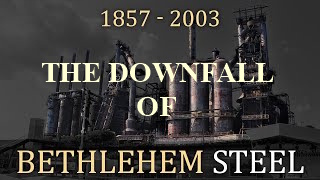
The Downfall of Bethlehem Steel
Bethlehem Steel built 80% of New York's skyline and more warships than any American company—then vanished. The failure wasn't foreign competition or union demands: it was Eugene Grace's 40-year reign creating a culture where innovation meant career suicide and outdated methods became sacred policy. The company clung to 19th-century open hearth furnaces producing steel in six hours while Japanese competitors adopted basic oxygen furnaces completing the process in one. When mini-mills like Nucor deployed electric arc furnaces with flexible work rules, Bethlehem dismissed them as incapable of matching quality. Meanwhile, the 1959 strike forced customers toward imports—jumping from 2 million to 5 million tons annually—and they never returned. By the 1990s, Bethlehem spent more on retiree benefits than raw materials. Nucor's survival reveals the pattern: market dominance without adaptation merely determines the altitude from which you fall. Strategic Timestamps 00:02:16 Economic necessity drove iron-to-steel pivot: iron rails failed under heavy traffic while steel rails lasted longer and commanded higher prices 00:08:07 Bethlehem provided steel for 80% of New York's 1920s skyline—Woolworth, Chrysler, Empire State—owning vertical construction through H-beam dominance 00:14:12 The 1959 strike opened foreign competition permanently: imports jumped from 2 million to 5 million tons and never returned to pre-strike levels 00:19:04 By the 1990s, Bethlehem Steel spent more on retiree benefits than on raw materials—demographic inversion crushing operational competitiveness 00:24:18 Nucor survived through aggressive technology adoption, non-union plants with flexible work rules, and strategic facility location—opposite of Bethlehem's rigidity
Recommended


The Trendslop Trap: Why AI Generates Mediocrity Instead of Strategy


The RUTHLESS 1980s Cassette Wars That FOOLED America (And Vanished)


Review
Add Review
You have to Sign In to share the review
Not Rated Yet