
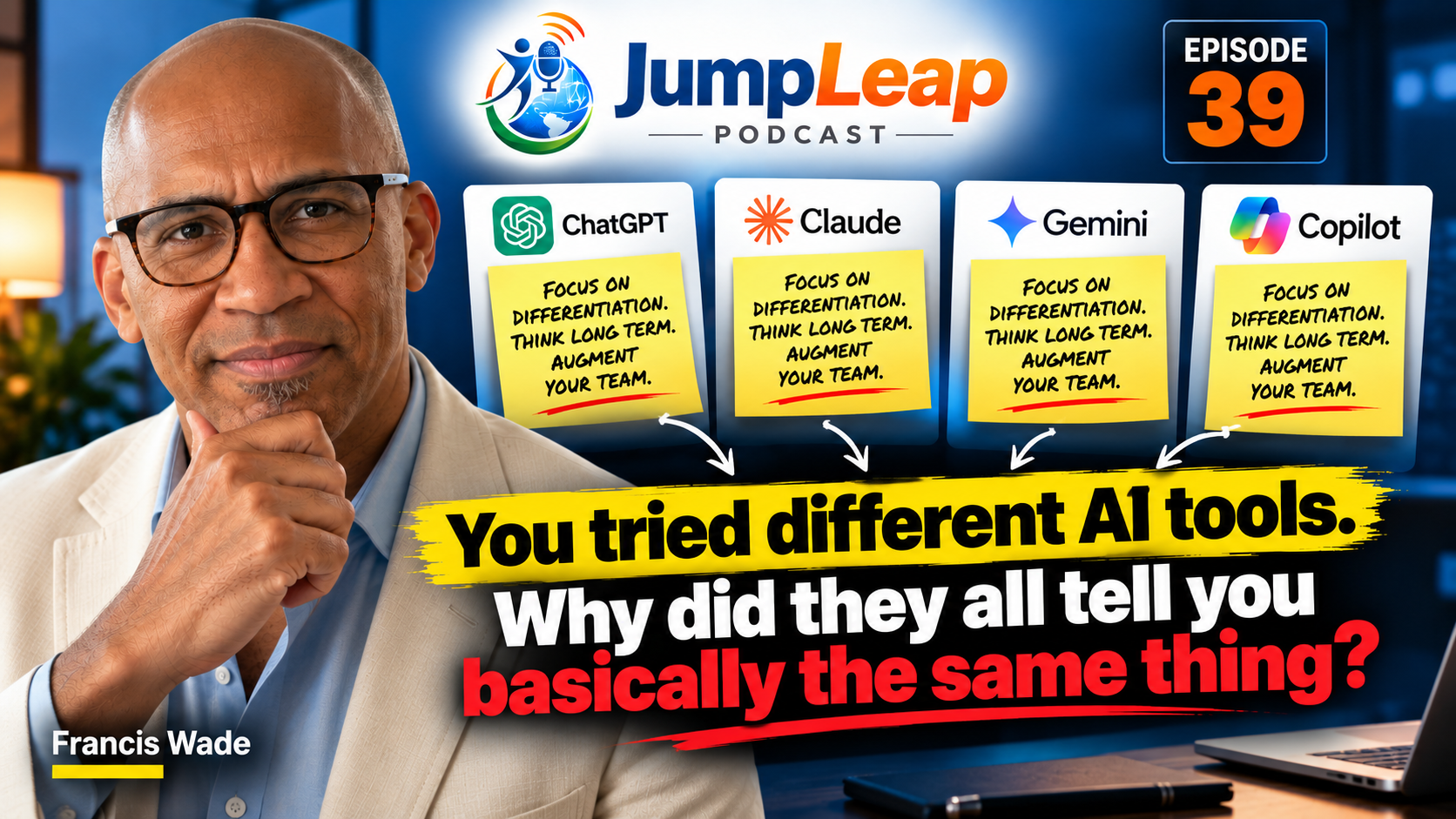
Ep 39 "Trendslop": Why AI Keeps Giving Strategists the Same Answer
1 h : 8 min English (US)
Kodak invented the digital camera in 1975, watched a senior manager say "I hope it never works," and buried it anyway. The failure wasn't persuasion or courage — it was architecture, and almost every organization is still building the same trap. Three disciplines separate companies that protect long-term bets from those that don't: structural separation, keeping strategic and operational accountability on different scorecards and budget lines; pre-commitment, making protective decisions before a crisis rather than during one, as Sony did in 1946 and Hilti did five years ahead of its subscription pivot; and governance visibility, reporting long-term work on its own terms rather than burying it inside quarterly numbers. IBM's Emerging Business Opportunities program, insulated this way from 2000–2005, contributed 19% of company growth versus 9% from acquisitions. The forward-looking case: installing this architecture before the next disruption arrives is not a strategic preference — it's the single highest-leverage decision a CEO can make. Timestamps: 00:09:20 Long-term strategy fails not from weak arguments but from missing architecture: no mechanism makes investment non-negotiable 00:19:03 Kodak's senior manager saw the 1975 digital camera prototype and told the inventor he hoped it never worked 00:49:29 IBM's Emerging Business Opportunities program, protected from quarterly P&L pressure, contributed 19 percent of growth versus 9 percent from acquisitions 01:01:09 Google Cloud, structurally protected from consolidated P&L pressure, turned years of losses into $15.2 billion quarterly revenue at 23.7 percent margin 01:23:31 Leaders who protected long-term bets won not by being smarter, but by pre-installing architecture that made the right behavior automatic
You have to Sign In to share the review




Not Rated Yet