
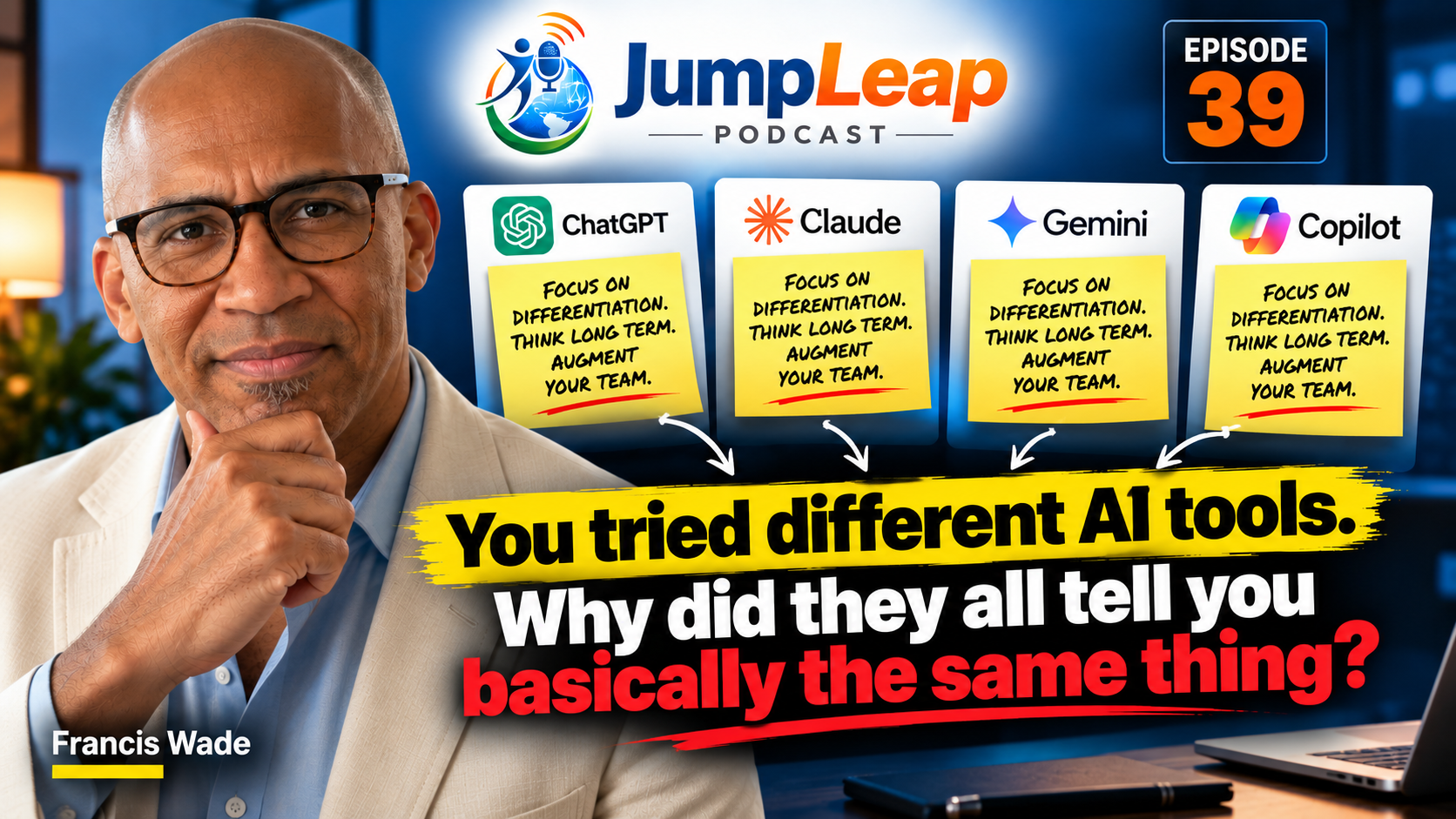
Ep 39 "Trendslop": Why AI Keeps Giving Strategists the Same Answer
1 h : 8 min English (US)

Disruption's deadliest trick: revenues spike before the crash. Research in Motion tripled revenue after iPhone launched—then tripled again—before falling off a cliff. Data becomes conclusive only when it's too late to act, making pattern recognition the superior strategic instrument. Scott Anthony maps disruption's architecture across 600 years—from Constantinople's walls falling in 47 days to Kodak buying Ofoto four years before Facebook. The mechanism: asymmetric motivation drives incumbents to rationally shed worst customers while entrants build on that abandoned base. Technology improves faster than needs evolve, transforming inferior offerings into dominant platforms. Dual transformation—reinvent today, create tomorrow, link capabilities—provides the structural response. Counterintuitive finding: disruption rewards crystallized over fluid intelligence—Gutenberg was 54, Ray Croc 52, Jobs 52 at iPhone launch. As AI reshapes consulting the way the printing press disrupted the Catholic Church, executives who recognize these patterns earliest will define the next competitive landscape. TIMESTAMPS: 00:09:23 Asymmetric motivation: market leaders rationally exit worst customers while entrants build capability on that exact abandoned tier 00:23:24 Constantinople's Theodosian walls—moat, dual 15-foot walls, 96 towers—withstood a thousand years but fell to cannon in 47 days 00:38:56 Kodak bought Ofoto in 2000—four years before Facebook—but couldn't pivot from manufacturing to social networking business model 00:52:10 Bacon's 1620 reframe: pursuing knowledge shifts from heretical to heroical—the scientific method as history's most disruptive idea 01:02:08 Disruption begins at 50: crystallized intelligence peaks into the 70s—Gutenberg was 54, Croc 52, Jobs 52 at iPhone launch
You have to Sign In to share the review






Not Rated Yet