

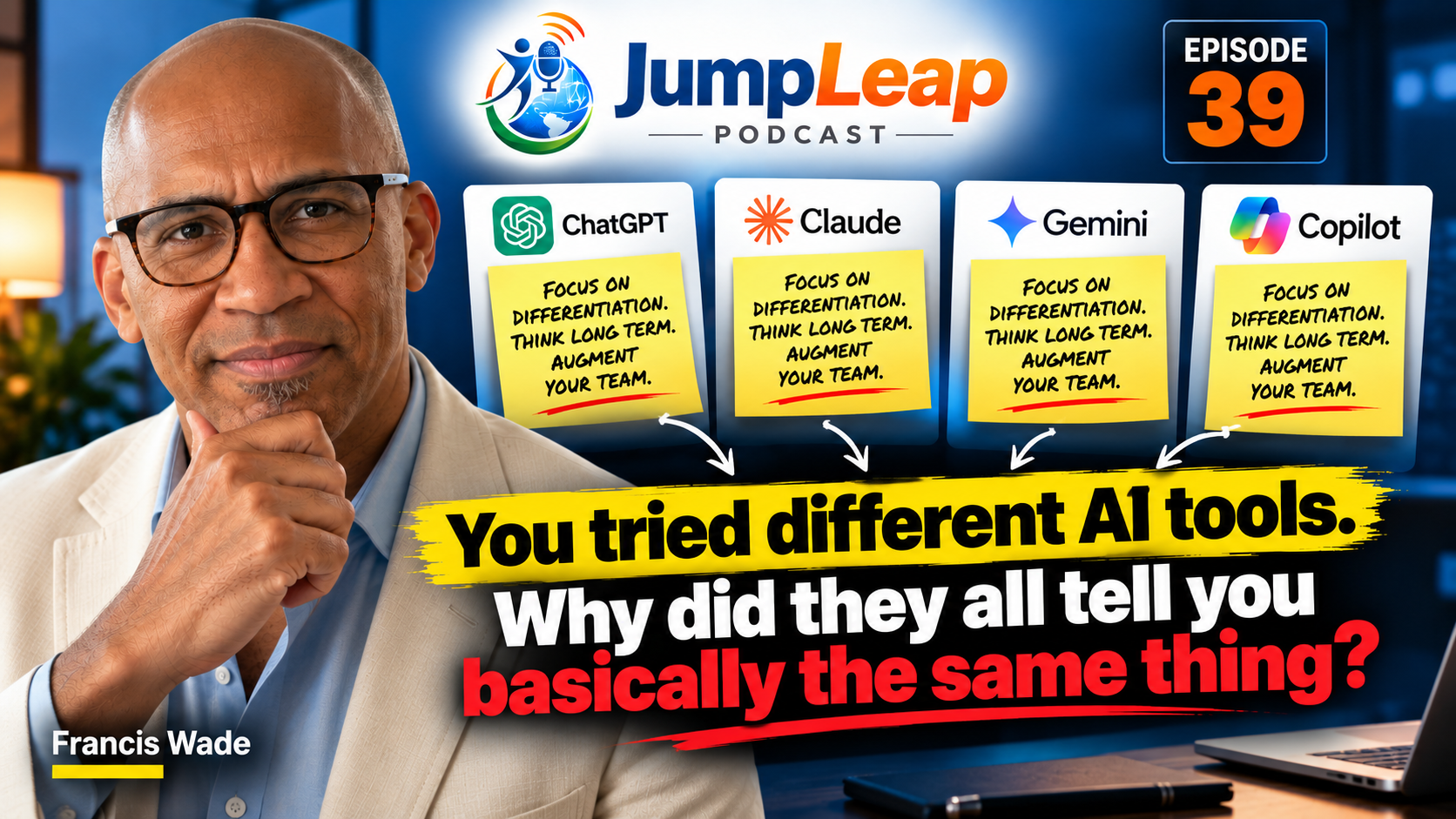
Ep 39 "Trendslop": Why AI Keeps Giving Strategists the Same Answer
1 h : 8 min English (US)
Pricing isn't an afterthought—it's a strategic weapon most founders deploy too late. The counterintuitive reality: testing willingness-to-pay before building product prevents the billion-dollar mistake of training customers to expect more for less. The Pareto principle governs value perception: 20% of features drive 80% of willingness-to-pay, yet founders typically offer that high-value 20% free, then chase low-value features customers won't pay for. LinkedIn succeeded where Plaxo failed by delaying monetization strategically—testing pricing signals early while building critical mass, then layering talent-side, sales-side, and consumer monetization sequentially. AI companies face new trade-offs: autonomy (copilot vs. agent) and attribution (productivity vs. outcomes) determine optimal pricing architecture—seat-based for low-autonomy/low-attribution, hybrid for increased attribution, usage-based for infrastructure plays, outcome-based for fully autonomous attributable agents like Intercom's resolution-based model. The strategic imperative: architect toward profitable growth by balancing market share capture with wallet share expansion simultaneously. Price before product, period—willingness-to-pay conversations precede development, not launch. 5 Timestamps 00:03:45 Netflix beat Blockbuster through pricing model innovation: subscription with no late fees versus per-title rental—how to charge mattered more than product differentiation 00:08:45 Product-market-price fit requires testing willingness-to-pay during development: asking "do you like sparkling water at $10?" changes conversation versus product alone 00:12:15 Pareto value paradox: 20% of features drive 80% willingness-to-pay—founders give away high-value 20% free, then build 80% low-value features customers won't buy 00:16:57 AI pricing model framework: autonomy (copilot vs agent) and attribution (productivity vs outcomes) determine architecture—seat-based, hybrid, usage-based, or outcome-based positioning 00:27:41 Behavioral anchoring case: presenting $500K fixed versus $50K plus 10% outcome enabled 10x price realization through choice architecture and courage signaling




You have to Sign In to share the review

Not Rated Yet