

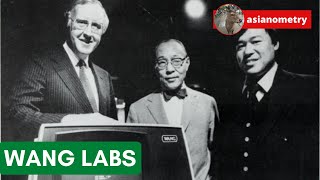
The Rise and Sad Fall of Wang Labs
📉 The Rise and Tragic Fall of Wang Laboratories Description This video details the remarkable entrepreneurial journey and subsequent collapse of Wang Laboratories, founded by the brilliant Chinese immigrant engineer An Wang. The company rose to prominence on the strength of Wang's singular genius, from patenting core memory technology to successfully transitioning from calculators to pioneering word processing systems (WPS) and mini-computers in the 1970s. At its peak, Wang Labs was a Fortune 500 powerhouse, dominating the office automation market. However, the video attributes the company's downfall in the mid-1980s to two critical errors: An Wang's failure to recognize the importance of the IBM PC Revolution and his insistence on appointing his inexperienced son, Fred Wang, to run R&D and later the presidency. This combination of missed technological shifts and chaotic succession led to product delays, internal turmoil, massive financial losses, and ultimately, bankruptcy in 1992, just two years after An Wang's death. 5 Key Moments and Timestamps 0:04:39: The Invention of Core Memory - While working at Harvard, An Wang invented the foundational concept for magnetic core memory (an ancestor of RAM) by realizing data could be read and immediately rewritten. He received a patent for this, which he later sold to IBM in 1955 for a crucial $400,000–$500,000 ($4.4M–$5.5M today), providing the seed money to move from consulting to product development. 0:12:01: The Calculator Success and Pivot - Wang Labs' first major hit was the Wang 300 calculator (1966), which sold extremely well on Wall Street and helped the company go public in 1967. However, realizing microprocessors would soon commoditize the market, An Wang made the "incredibly ballsy decision" to pull out of the calculator market in 1971 to focus entirely on computers. 0:17:19: Dominance with Word Processing - After a failed initial attempt, Wang released the redesigned Wang Word Processing System (WPS) in 1976. It was an immediate hit due to its power, upgradability, and ease of use (ditching IBM's Selectric and using a CRT screen), quickly making Wang the world's largest supplier of CRT-based word processing systems by the late 1970s. 0:19:20: Reaching the Peak - In 1978, Wang launched a massive ad campaign, culminating in a Super Bowl ad directly attacking IBM, which boosted public awareness from 3% to 14%. Sales reached $1 billion in 1982 and $2 billion in 1984. An Wang's stake peaked at over $1.6 billion in 1984, making him the richest man in New England. 0:24:00: The Fatal Misjudgment - An Wang resisted the PC, believing it was a "dead end commodity" like the calculator. This led him to miss the IBM PC Revolution. Coupled with his decision to install his inexperienced son Fred Wang in critical leadership roles, the company was unable to put out competitive products, leading to a massive 66% quarterly profit decline in 1985 and the beginning of the end.
Recommended





Warner Bros: How a $82B Industry Titan Collapsed




Review
Add Review
You have to Sign In to share the review
Not Rated Yet