

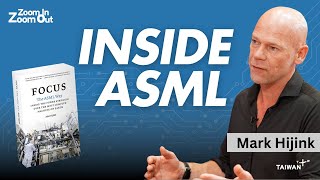
The Inside Story of ASML's Focus and Business Strategy
The world's most powerful technology monopoly controls 90% of chip lithography while owning almost none of its supply chain. ASML's paradox: extreme market concentration built on deliberate dependency—80% of each machine manufactured by external partners—creating an ecosystem that absorbs industry cyclicality rather than internalizing it. Three mechanisms sustain this monopoly. A 10-to-15-year planning horizon locks customers into roadmap dependency before fabs break ground. Geopolitical neutrality—ASML supplying 90% of litho tools, TSMC producing 70% of advanced logic—makes customer favoritism commercially suicidal; both operate as semiconductors' Switzerland. Most critically: Arizona's TSMC expansion exposes human capital as the binding constraint—physical infrastructure replicates; tacit knowledge networks don't. For strategy leaders, the ASML model fundamentally reframes reshoring logic: the bottleneck isn't capital or policy—it's human ecosystem density accumulated over decades. The next competitive frontier isn't who builds the fabs, but who cultivates the knowledge networks that make them run. TIMESTAMPS 00:00:48 ASML controls 90% of global chip lithography yet outsources 80% of machine components—monopoly built on managed dependency, not vertical integration. 00:03:28 ASML's 80% outsourced supply chain creates an ecosystem absorbing industry cyclicality—concentration without the fixed cost exposure of vertical integration. 00:07:38 TSMC supplying 70% of advanced logic and ASML 90% of litho tools forces neutrality—favoritism toward either superpower is commercially suicidal. 00:09:56 Arizona's TSMC expansion reveals the real bottleneck: fabs replicate in two years; the tacit knowledge networks sustaining yield take decades. 00:12:09 Semiconductor competitiveness requires radical directness—politeness adds latency, and in an industry where timing determines market windows, cultural friction is a strategic liability.
Recommended









Starring

Review
Add Review
You have to Sign In to share the review
Not Rated Yet