
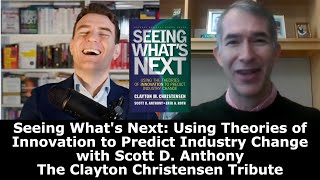
Seeing What's Next: Using Theories of Innovation to Predict
Clayton Christensen's protégé reveals how theory transforms guesswork into foresight. Scott D. Anthony unpacks the frameworks from "Seeing What's Next"—showing why Western Union dismissed Bell's telephone as a toy, why Tesla confounds traditional disruption theory, and how law firms are being dismantled despite record profits today. The core revelation: good theory requires just two elements—getting categories right and understanding causality. When customers become overshot, margins plateau, and loyalty declines, disruption becomes inevitable. Yet incumbents rationally make every wrong decision because their resources, processes, and values optimize for yesterday's game. Discover the tale of the tape for predicting competitive outcomes, why Netflix hid behind Blockbuster's asymmetric motivations, and how Amazon's cloud computing started as an internal IT problem. Learn to spot early warning signals before the tsunami hits—when your best customers start experimenting, when venture capital floods adjacent markets, when profitability rises as disruption accelerates. Essential frameworks for seeing around corners when data doesn't exist yet and the future demands different lenses than the past provided. 00:08:13 Good theory requires two elements: getting categories right and understanding causality between circumstances and results 00:16:34 Western Union missed telephone because every incremental decision optimized existing business—looked right until too late 00:22:09 Overshoot occurs when solutions exceed needs; undershoot when problems remain unsolved; determines competitive strategy entirely 00:38:50 Early warning signals: margins plateau, price premiums decline, loyalty drops, customers experiment—all visible before crisis 00:54:05 Tale of tape predicts winners: analyze resources/processes/values, asymmetric motivations create shield, capabilities build sword
Recommended






Review
Add Review
You have to Sign In to share the review
Not Rated Yet