
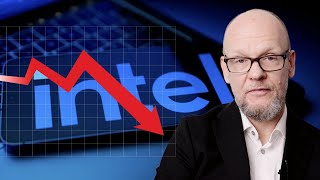
How Bad CEOs Destroyed Intel
Why Leadership Selection Strategists Rewatch This 20-Minute Intel CEO Archetype Failure Intel held "estimated 90% share of global personal computer CPU market" in 2000 yet "revenue Q1 2020 was $20B, Q1 2025 12.2B"—laying off "25,000 employees out of total 109,500, even bailed out by US government who now taken stake in former giant." Core problem: "since 2013 Intel been led by CEOs that were not product centric, probably biggest mistake, sector where dominance attained by having best fastest newest most efficient product." The four CEO archetype framework at 06:50 reveals situational leadership: "caretaker provides continuity in stable spaces, cost CEO experts at cutting costs and structuring debt, growth CEO understands customers and market dynamics, product CEO like Steve Jobs comes up with car not faster horses"—all "situationally relevant, none inherently better or worse than others." The Bob Swan cost CEO disaster at 13:23 quantifies wrong archetype: "former and almost lifelong chief financial officer, skills not in product not in growth, good at only one thing cutting cost and restructuring debt"—tenure "very little if any meaningful technological development made at Intel, effects first truly seen under Pat Gelsinger where painfully clear Intel fallen massively behind." The Pat Gelsinger premature retirement at 14:25 exposes board impatience: "product CEO, return to productled company which without a doubt what Intel was in need of, embarked on journey to transform Intel into fab producer, spoton"—but "by time he walked through door Intel already massively behind, had to play catchup, probably went too big as product CEOs sometimes do, patience from board ran out." The Lip Bhutan cost CEO shift at 15:22 signals continuation problem: "first days defined by behavior of cost CEO cutting back massively on lot of investments Pat set in motion especially fab production"—strategic choice "prioritize manufacturing efficiency probably correct but key question is how does he keep up pace in industry where technological innovation keeps you relevant?" The board composition failure at 18:40 reveals governance blind spot: "currently 11 people on Intel's board, very few had any meaningful indepth insight into industry, stacked towards investors and generic professional board members and finance optimizers"—new board "still got strong lean towards optimization cost cutting and generic business, hasn't inspired industry insiders with confidence." Strategic lesson: consistently hiring wrong CEO archetype for sector reality creates irreversible competitive displacement—product-driven semiconductor industry requires product-centric CEOs but Intel board's finance optimization bias selected cost/growth CEOs enabling AMD/Nvidia dominance. 5 Key Timestamps: [02:26] The 90% to Irrelevance Decline – "2000 Intel had estimated 90% share global PC CPU market" but "revenue Q1 2020 was $20B, Q1 2025 12.2B"—laying off "25,000 employees out of 109,500, even bailed out by US government" [06:50] The Four CEO Archetype Framework – "Caretaker provides continuity, cost CEO experts at cutting costs, growth CEO understands customers, product CEO like Steve Jobs comes up with car not faster horses"—all "situationally relevant, none inherently better or worse" [13:23] The Bob Swan Cost CEO Void – "Former lifelong CFO, skills not in product not in growth, good at only one thing cutting cost"—under him "very little meaningful technological development, effects first seen under Pat Gelsinger where painfully clear Intel fallen massively behind" [14:25] The Pat Gelsinger Product CEO Retirement – "Product CEO, return to product led company which without a doubt what Intel needed"—but "by time walked through door already massively behind, probably went too big as product CEOs do, patience from board ran out" [18:40] The Finance-Optimized Board Composition – "Currently 11 people on board, very few had meaningful indepth insight into industry"—"stacked towards investors and generic professional board members and finance optimizers, still got strong lean towards optimization cost cutting, hasn't inspired industry insiders with confidence"

Not Rated Yet