The Rise of America's Largest Gas Station BUC-EE's

The Rise of America's Largest Gas Station BUC-EE's

10 min
Buc-ee's defied gas station commodity economics by deliberately rejecting 18-wheelers and building cult following through obsessive cleanliness—transforming pit stops into must-see destinations generating $959M revenue from 35 Texas locations before interstate expansion. Discover how Arch "Beaver" Aplin III weaponized customer experience against industry assumptions. The counterintuitive positioning: turn away truckers to create family-friendly haven with 120 fuel pumps and award-winning restrooms. New Braunfels location opened 68,000 square feet with 83 toilet stalls, becoming world's largest convenience store drawing 10,000 visitors on day one. Revenue rocketed from $202M to $959M (2006-2015) while remaining private and Texas-exclusive. Strategic expansion mastery: dominated home state completely before 2019 Alabama launch, then methodical Southeast rollout maintaining legendary standards. Proves commodities become destinations through relentless experience excellence and strategic trade-offs—saying "no" to segments creates differentiation worth traveling hundreds of miles to experience. 00:03:24 Customer experience obsession from grandparents' store: friendly service, fair prices, cleanliness became Buc-ee's competitive moat differentiator 00:03:55 Strategic positioning: deliberately rejected 18-wheelers, posted "no big rigs" signs—families and road trippers only, not industrial truck stop 00:05:08 New Braunfels record: 68,000 sq ft, 60 pumps, 83 toilets, 10,000 opening day visitors—won America's Best Restroom Award 00:06:44 Revenue explosion: $202M to $959M between 2006-2015 with approximately 35 Texas locations before any out-of-state expansion 00:08:29 Expansion cult following: Alabama family drove to Virginia opening, then Georgia next day—buzz creates sky-high expectations requiring perfect execution
The Coast Guard: Foresight in Action

The Coast Guard: Foresight in Action

11 min
Two full-time employees and $500,000 annually transformed 50,000-person Coast Guard from world-class responders into anticipators—less than one penny per $100 budget delivering 23 years of structural impact. Post-9/11 realization: reacting isn't enough when the world rewrites rules faster than playbooks update. Discover Project Evergreen's alternative futures methodology—not predictions but strategic sandboxes where hundreds immerse in four divergent "what if" worlds, identifying cross-scenario strategic needs that hold up whether Arctic geopolitics or cyber warfare dominates. Learn how scenarios stress-tested billion-dollar investments, requiring every budget request prove resilience across multiple futures before approval. Concrete outcomes: Deployable Operations Group creation, Force Readiness Command establishment, undersea infrastructure protection before vulnerability became obvious. The multiplier effect: 1,000+ participants became strategic thinking evangelists, spreading scenario insights throughout organization. FEMA and Port Authority adopted methodology because structure beats short-term anxiety. Imagination costs little; ignoring futures proves catastrophically expensive through wrong capabilities and missed opportunities. 00:00:36 Post-9/11 Coast Guard question: "What if we'd been planning for wrong future?"—sparked 23-year foresight transformation 00:02:40 Alternative futures scenarios: strategic sandboxes, not predictions—immerse hundreds in divergent worlds, identify cross-scenario strategic needs 00:04:59 Scenarios stress-tested major expenditures: every budget request proved resilience across multiple futures, not convenient assumptions 00:06:01 Concrete impacts: Deployable Operations Group created, Force Readiness Command established, underwater infrastructure protection prioritized before obvious 00:08:09 Two full-time employees, $500K annually—less than one penny per $100 in $12B budget for transformative impact
Skype: What Went Wrong?

Skype: What Went Wrong?

19 min
Skype pioneered internet calling with 170M users by 2011, sold to Microsoft for $8.5B, then collapsed when COVID created perfect conditions—Zoom captured 50% market share in months while Skype's 17-year head start evaporated. Fatal acquisition pattern repeated: buyers who didn't understand the business (Meg Whitman's imaginary eBay synergies, Ballmer's integration fantasies) overpaid while founders extracted maximum value. Peer-to-peer architecture became technical debt when mobile emerged. Microsoft's 2017 Snapchat clone destroyed brand equity—UK App Store ratings collapsed from 3.5 to 1 star. Eric Yuan built Zoom asking one question: "Does this deliver customer happiness?" Frictionless one-click meetings crushed Skype's account requirements and cluttered interface. Zoom exploded from 10M to 300M daily users during pandemic. Microsoft's $8.5B acquisition taught them video calling while burning shareholder value through strategic neglect. Teams reached 320M users while Skype withered to 36M. Shut down May 2025—acquirers who don't understand business mechanics consistently lose to sellers who do. 00:02:00 Peer-to-peer architecture bypassed central servers—more users improved performance, created virality where product growth drove friend invitations naturally 00:03:49 eBay's Meg Whitman paid $4.1B imagining buyer-seller voice synergies that never materialized—buyers didn't understand business mechanics 00:10:04 Skype's original peer-to-peer genius became Achilles heel—architecture designed for desktops couldn't handle mobile world, required rebuilding mid-flight 00:13:42 Skype had 32% market share, 17-year head start entering COVID—Zoom grew 30x in months, capturing 50% market share 00:14:46 Yuan built Zoom asking "does this deliver customer happiness"—frictionless one-click meetings versus Skype's account requirements destroyed brand
Dropbox: When Ignoring Big Tech Backfires

Dropbox: When Ignoring Big Tech Backfires

14 min
Dropbox pioneered cloud storage but now executes a harvest strategy—borrowing $2B in 2024 purely for share buybacks while paying users flatlined three years straight. The counterintuitive lesson: being first means nothing when your core product becomes a loss leader for trillion-dollar ecosystems. Discover how commoditization killed Dropbox's moat—Google and Microsoft offer storage free because it's not the product, it's the gateway to productivity suites. Learn why Dropbox's horizontal integration attempts (Paper, HelloSign, Mailbox) failed against true ecosystems, and how their fatal hesitation between consumer and enterprise markets left them vulnerable to competitors who chose decisively. Box went 95% enterprise; Dropbox chose neither and lost both. The brutal economics: revenue crawled 4.5% annually while competitors grew exponentially through cross-subsidization. Dropbox's $4B buyback spree signals corporate acceptance—they're squeezing remaining value rather than planting seeds. Essential case study for understanding when first-mover advantage collapses under commodity economics and strategic indecision. 00:01:14 Dropbox's model: offer storage as affordable service using economies of scale, platform-agnostic solution solving chaos problem 00:04:14 Storage became commodity: tech giants use it as loss leader, not profit center—Dropbox sells storage, competitors give it free 00:06:20 Paper positioned as note-taking not productivity suite, failed horizontal integration—couldn't compete with Google/Microsoft ecosystems 00:09:21 Dropbox hesitated between consumer and enterprise, refused to become Box, chose neither strategy and lost both markets 00:12:16 Harvest strategy: stop planting growth seeds, squeeze remaining profit, return cash to shareholders while market moves on
How the Algorithm Hijacked Monkey's Brain

How the Algorithm Hijacked Monkey's Brain

14 min
You're not lazy—you're trapped in the algorithm's perfect illusion. This investigation reveals why Monkey watches 10 hours of tutorials but can't code "Hello World." The culprit: platforms engineered for engagement, not education, exploiting the gap between information exposure and skill acquisition. Discover how algorithms study your behavior better than you study anything, feeding dopamine hits that mimic real progress. Learn why 27 unfinished courses and 50 saved playlists create the "illusion of competence"—your brain confuses watching gym videos with actual exercise. The brutal truth: algorithms reward completion, not understanding, training you to press buttons faster without thinking deeper. Breaking free requires active learning—building one webpage teaches more than ten tutorials. Uncover the five-step rebuild: single goals, disabled autoplay, real feedback loops, output tracking, and focus protection. The algorithm isn't evil; it's efficient, giving you what you click, not what you need. Train it by changing your signals. 00:01:24 Core problem identified: watching creates illusion of competence, brain confuses information exposure with skill acquisition completely 00:02:42 Algorithm's true purpose: keep eyes on screen, not make users smarter—rewards entertainment over education 00:04:45 Fake learning loop: watching 10 hours of tutorials gives dopamine hit without opening code editor once 00:07:15 Dopamine hijacking: brain stops asking "what did I learn" and starts asking "what should I watch next" 00:09:42 Five-step rebuild: one small goal, private environment, real feedback, track outputs not inputs, protect focus
Strategy: How Disney Leveraged Adults' Nostalgia

Strategy: How Disney Leveraged Adults' Nostalgia

32 min
Disney didn't accidentally create fanatics who spend $35,000 on 10-day vacations—they engineered them over 40 years using principles borrowed from religion and psychology. This investigation reveals how Michael Eisner's failed "age decompression" strategy evolved into Bob Iger's acquisition spree, transforming Disney from entertainment company into emotional monopoly. Discover how Disney passes every anthropological test for religion: symbol systems (Mickey recognized by 97% of Americans), behavioral indoctrination starting before age seven, pilgrimage-like theme park rituals, and treating fantasies as reality (Golden Oak residents paying $20M to live inside Disney World). Learn why philosopher Bernard Stiegler identified Disney Adults as the dream customer—big kids with adult salaries who've redirected cognitive capacity from life skills into consumption expertise. The brutal economics: movie divisions hemorrhage hundreds of millions while Parks generate $34 billion annually. Disney squeezes superfans harder to cover creative failures, creating feedback loops where devotees defend price increases as proof of loyalty. Meanwhile, toy companies, LEGO, and PopMart copy the playbook—selling nostalgia premiums to adults who never learned to say no. 00:01:02 Eisner's 1984 crisis response: "age decompression is key"—stretch brand attachment from childhood through adulthood permanently 00:05:41 Iger's pivot: don't make Disney adult, make adulthood extended childhood with Disney soundtrack throughout 00:06:42 Acquisition strategy: Pixar $7.4B, Marvel $4B, Lucasfilm $4B—buying emotional portfolios, not creating new mythologies 00:11:03 Five religious elements: symbol systems, teachings about existence, behavioral indoctrination, ritual performance, treating conceptions as real 00:17:16 Bernard Stiegler's theory: fully formed adults make bad customers, children chase feelings not spreadsheets 00:24:04 Financial reality: Strange World, Lightyear, Wish lose hundreds of millions while Parks generate $34B subsidizing failures 00:27:08 Disney Adult as prototype: toy companies, LEGO, PopMart copy blueprint selling nostalgia premiums to overgrown kids
Ep 32 - From Idea Overload to Execution - A Strategists Guide to Prioritisation

Ep 32 - From Idea Overload to Execution - A Strategists Guide to Prioritisation

1 h : 21 min

Your organization has 37 brilliant projects. You have bandwidth for maybe 5.

Now what?

This is the reality facing leaders everywhere: expensive master plans that deliver impressive lists of initiatives but zero guidance on which ones to actually pursue. Meanwhile, your CEO expects magic, your budget is maxed out, and that critical board meeting is in two weeks.

Sound familiar?

This episode tackles one of strategy's most brutal challenges: how do you prioritize when everything seems important and resources are painfully limited?

Through the story of "Stephanie"—a VP drowning in a 37-project master plan with no execution roadmap—this conversation exposes the hidden traps of poor prioritization and reveals a systematic approach to cutting through the chaos.

You'll discover:

  • Why "let's start everything and see what works" destroys value faster than doing nothing
  • The real cost of scattered execution (spoiler: it's not just wasted money)
  • A proven framework for organizing idea overload into executable strategy
  • How to build decision-driven roadmaps that preserve flexibility while driving focus
  • The art of strategic sequencing: when to say "not now" to protect "yes" for the right projects

The hard truth: Most organizations fail not because they lack good ideas, but because they try to execute too many at once. The companies that win? They master the discipline of strategic prioritization.

Stop drowning in possibilities. Start executing with purpose.

🔗 Learn more about opportunity framing: www.wilson.biz


10 Key Timestamps

00:05 - The Idea Overload Problem Why pursuing all your great ideas simultaneously guarantees mediocre results

04:15 - How to Think About Wicked Problems The 55/5 rule: spending most of your time understanding problems, not jumping to solutions

06:38 - The 37-Project Nightmare When your master plan creates more paralysis than clarity

08:48 - The Consultant's Expensive List What happens when deliverables stop short of actual strategic guidance

1:14:10 - The PATH Framework: Organize the Chaos A systematic approach to opportunity framing: Prepare, Analyze, Targets, Handle

1:15:35 - In, Out, or Unknown? The critical distinction that prevents scope creep and forces clarity on uncertainty

1:18:13 - Mapping Your Decision Dependencies Why understanding what choices unlock other choices is the key to sequencing

1:19:38 - Building Strategic Check-In Points Creating moments to pivot before you're too committed to change course

1:21:44 - From Strategy Document to Daily Execution The bridge between high-level plans and operational reality

1:16:33 - The Scope Shuffle Technique How to create space for "I don't know" and turn uncertainty into actionable decisions

The 5-Level Strategic Fluency Ladder

The 5-Level Strategic Fluency Ladder

1 h : 8 min
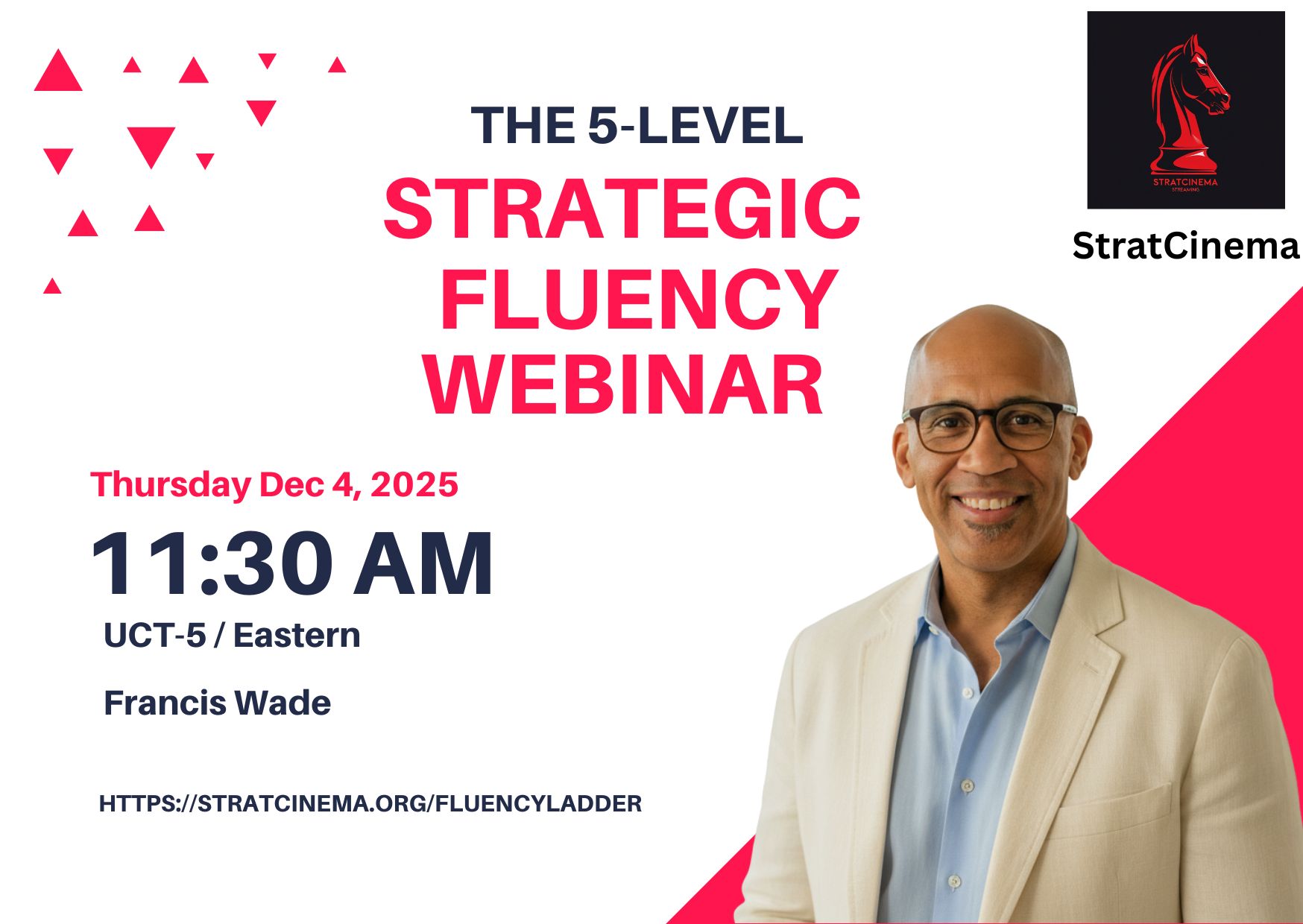
Most professionals plateau at strategic mediocrity without realizing it. Francis Wade reveals the five-level Strategic Fluency Ladder that separates executives who merely use strategy vocabulary from those who genuinely think strategically. Discover why reading business books and attending workshops doesn't automatically translate to strategic capability—and how to diagnose your actual fluency level. Level One strategists can't distinguish strategy from tactics. Level Three executives confidently discuss frameworks but struggle with real-world application. Level Five leaders seamlessly integrate strategic thinking into daily decisions, spotting patterns others miss. Wade exposes the dangerous illusion where vocabulary mastery masks conceptual weakness—people sound strategic without being strategic. Learn the self-assessment framework for identifying your current level, understanding why most organizations operate between Levels Two and Three, and discovering the specific practices required to advance. Essential viewing for anyone who suspects their strategic capabilities don't match their strategic responsibilities. 00:00:00 Strategic fluency defined: ability to think strategically versus merely discussing strategy using borrowed vocabulary without comprehension 00:08:45 Level One characteristics: cannot distinguish strategy from tactics, confuses operational planning with strategic thinking entirely 00:18:32 Level Three trap: confidently discusses frameworks and concepts but struggles applying them to novel business situations 00:32:15 Assessment framework: self-diagnosis questions reveal gap between perceived strategic competence and actual strategic fluency level 00:45:20 Advancement practices: specific exercises for moving up ladder including case comparisons, pattern recognition, framework interrogation
Navigating Innovation and Creating an Invincible Company

Navigating Innovation and Creating an Invincible Company

37 min
Innovation coach reveals why most companies waste years building products nobody wants. Nick Himowicz unpacks the "Kill Your Startup in 90 Minutes" workshop—designed to destroy bad ideas before they drain resources. The core problem: founders spend months on product development without proper customer interviews, then sweat through desperate validation pitches asking "please tell us you like it." Discover why The Invincible Company redefines innovation as R&D (optional) + Business R&D + Execution—Steve Jobs didn't invent the mouse, he excelled at customer value and business models. Learn the visual framework that forces founders to extract messy mental models onto paper, eliminating "blah blah blah" conversations that camouflage flawed assumptions. Case study: Simples built a €10M portfolio in Moldova by solving local needs ignored by Google and Amazon, then scaling globally with underwater swimming tech. Their strategy proves you can explore new markets while exploiting current businesses—the portfolio approach to invincibility. 00:00:26 Kill startup in 90 minutes: prefer destroying ideas fast versus wasting three years, thousands of pounds 00:12:03 Invincible company visual: most companies start and stop quickly, goal is continuous survival beyond scale 00:15:01 Innovation redefined: R&D optional, business R&D non-negotiable—customer value plus business model plus execution 00:17:24 Customer interview failures: founders spend years building, then desperately pitch hoping for validation under pressure 00:28:33 Simples case study: €10M Moldova portfolio solving local needs, became explorers scaling globally with underwater tech
Hard to Engage Staff on Vision/Strategy? In Your Sleep w/AI

Hard to Engage Staff on Vision/Strategy? In Your Sleep w/AI

36 min
Strategy dies in the gap between communication and activation. Two strategy consultants reveal why traditional approaches—town halls, PowerPoint decks, cascading KPIs—leave employees with metrics but no context for daily decisions. The problem isn't that CEOs don't communicate enough; it's that strategy never becomes alive in the minds of frontline workers making real trade-offs. Amy unveils ContextUM, an AI tool that walks CEOs through interactive strategy mapping, extracts principles through dialogue, then enables employees to query strategic dilemmas in real-time. Sales rep facing a contract decision at midnight? The AI applies strategy principles to help navigate the choice. Francis demonstrates NotebookLM integration—transforming strategy documents, transcripts, and interviews into interrogable knowledge bases where employees ask "what does this mean for my job?" Both approaches surface critical insight: AI is terrible at independent research but brilliant at extracting principles from human-provided truth. The breakthrough isn't AI replacing strategists—it's AI activating strategy through people, creating feedback loops that surface outdated assumptions before they kill execution. 00:02:24 Core problem redefined: not communication failure but activation gap where strategy becomes memory instead of living context 00:08:28 Why talking doesn't activate: one-way information delivery versus strategy as context for moment-by-moment employee decisions 00:16:30 ContextUM prototype: interactive CEO onboarding extracts principles, employees query real dilemmas, dashboard surfaces recurring strategic tensions 00:22:06 NotebookLM approach: strategy sources become interrogable environment, employees ask unlimited questions, surface outdated assumptions upward 00:33:03 Critical AI limitation: terrible at independent competitor research, expert at extracting principles from human-provided strategic truth
The Rise of America's Largest Gas Station BUC-EE's
10 min
The Coast Guard: Foresight in Action
11 min
Skype: What Went Wrong?
19 min
Dropbox: When Ignoring Big Tech Backfires
14 min
How the Algorithm Hijacked Monkey's Brain
14 min
Strategy: How Disney Leveraged Adults' Nostalgia
32 min
Ep 32 - From Idea Overload to Execution - A Strategists Guide to Prioritisation
1 h : 21 min
The 5-Level Strategic Fluency Ladder
1 h : 8 min
Navigating Innovation and Creating an Invincible Company
37 min
Hard to Engage Staff on Vision/Strategy? In Your Sleep w/AI
36 min
#1 in Series Today

Pirates of Day One

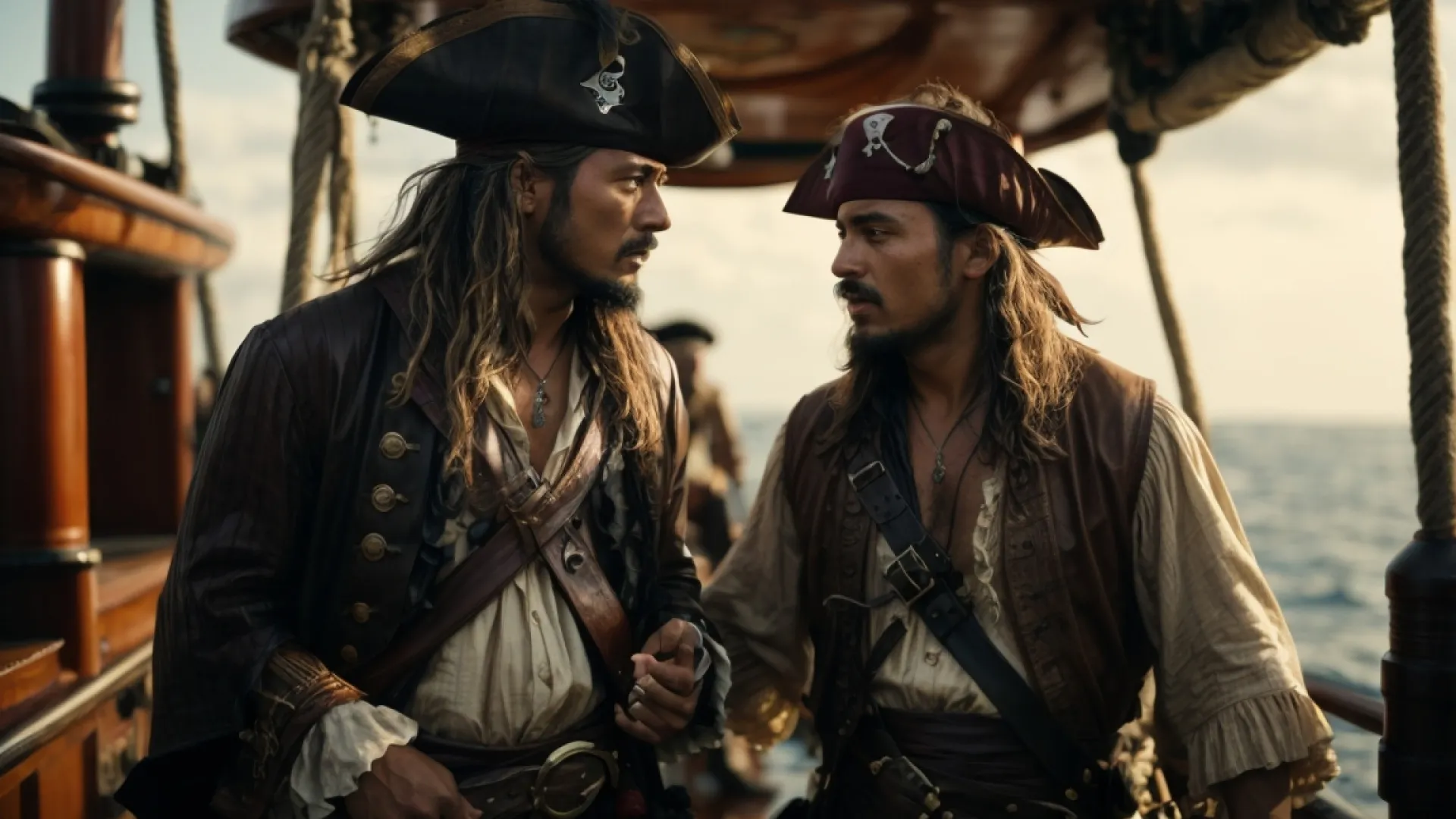
Pirates of Day One is an original, epic series that reimagines the classic pirate genre by blending adventure, fantasy, and historical drama. Set in an alternative 17th-century world where mythical creatures, ancient magic, and powerful artifacts exist, the series follows a ragtag crew of pirates with diverse backgrounds and mysterious pasts. Each character is drawn to the high seas for different reasons—revenge, freedom, treasure, or secrets. They form an unlikely family as they face formidable foes and legendary sea monsters, uncovering secrets that could reshape the world.

February 2025 3 Seasons
#2 in Series Today

The Hunter

In the enthralling television series "The Hunter," the city stands as a kingdom in turmoil, where dragons of corruption and power wage silent wars in the shadows. Our relentless detective, a self-proclaimed king of justice, navigates this treacherous realm, seeking to unravel the mysteries that lie within. Over the course of four thrilling seasons, "The Hunter" explores the battle for truth and morality as the detective confronts the dragons of corruption that threaten to consume the kingdom. With each season, new battles emerge, secrets resurface, and kings rise and fall, shaping the destinies of both the characters and the city they call home.

February 2025 4 Seasons
#3 in Series Today

Lost In Space

Lost in Space is a sci-fi adventure series that follows the Robinson family, who are selected to join a space colony mission. However, when their spacecraft veers off course, they become stranded on an unknown planet. As they struggle to survive in a dangerous new environment, they encounter an enigmatic robot, strange alien life, and a cunning stowaway, Dr. Smith. The series explores themes of survival, family bonds, and resilience as they work to find a way back to their original mission.

December 2024 3 Seasons
#4 in Series Today

Vikings

As Ragnar Lodbrok, a Norse farmer, carries out triumphant raids into English territory with the help of his fellow warriors, he ends up holding sway over the Vikings and becoming a Scandinavian king.

January 2025 2 Seasons