


loader image
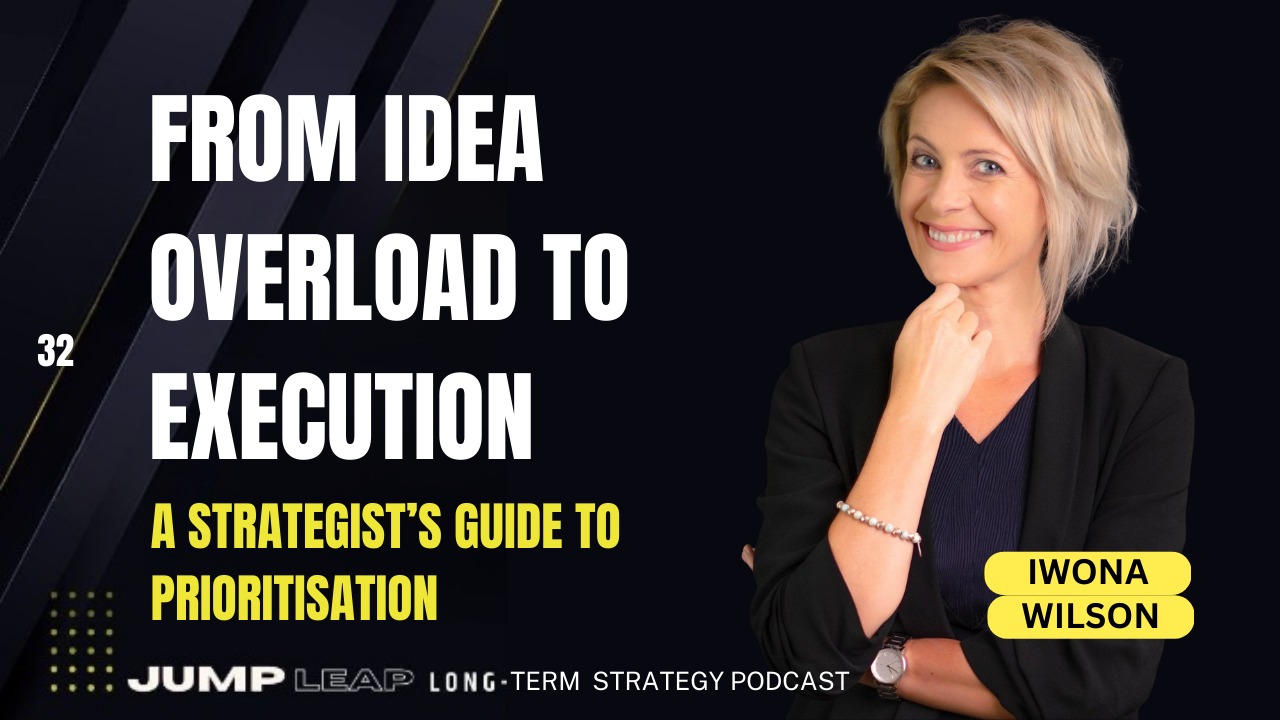
Ep 32 - From Idea Overload to Execution - A Strategists Guide to Prioritisation

Ep 32 - From Idea Overload to Execution - A Strategists Guide to Prioritisation

1 h : 21 min

Your organization has 37 brilliant projects. You have bandwidth for maybe 5.

Now what?

This is the reality facing leaders everywhere: expensive master plans that deliver impressive lists of initiatives but zero guidance on which ones to actually pursue. Meanwhile, your CEO expects magic, your budget is maxed out, and that critical board meeting is in two weeks.

Sound familiar?

This episode tackles one of strategy's most brutal challenges: how do you prioritize when everything seems important and resources are painfully limited?

Through the story of "Stephanie"—a VP drowning in a 37-project master plan with no execution roadmap—this conversation exposes the hidden traps of poor prioritization and reveals a systematic approach to cutting through the chaos.

You'll discover:

  • Why "let's start everything and see what works" destroys value faster than doing nothing
  • The real cost of scattered execution (spoiler: it's not just wasted money)
  • A proven framework for organizing idea overload into executable strategy
  • How to build decision-driven roadmaps that preserve flexibility while driving focus
  • The art of strategic sequencing: when to say "not now" to protect "yes" for the right projects

The hard truth: Most organizations fail not because they lack good ideas, but because they try to execute too many at once. The companies that win? They master the discipline of strategic prioritization.

Stop drowning in possibilities. Start executing with purpose.

🔗 Learn more about opportunity framing: www.wilson.biz


10 Key Timestamps

00:05 - The Idea Overload Problem Why pursuing all your great ideas simultaneously guarantees mediocre results

04:15 - How to Think About Wicked Problems The 55/5 rule: spending most of your time understanding problems, not jumping to solutions

06:38 - The 37-Project Nightmare When your master plan creates more paralysis than clarity

08:48 - The Consultant's Expensive List What happens when deliverables stop short of actual strategic guidance

1:14:10 - The PATH Framework: Organize the Chaos A systematic approach to opportunity framing: Prepare, Analyze, Targets, Handle

1:15:35 - In, Out, or Unknown? The critical distinction that prevents scope creep and forces clarity on uncertainty

1:18:13 - Mapping Your Decision Dependencies Why understanding what choices unlock other choices is the key to sequencing

1:19:38 - Building Strategic Check-In Points Creating moments to pivot before you're too committed to change course

1:21:44 - From Strategy Document to Daily Execution The bridge between high-level plans and operational reality

1:16:33 - The Scope Shuffle Technique How to create space for "I don't know" and turn uncertainty into actionable decisions

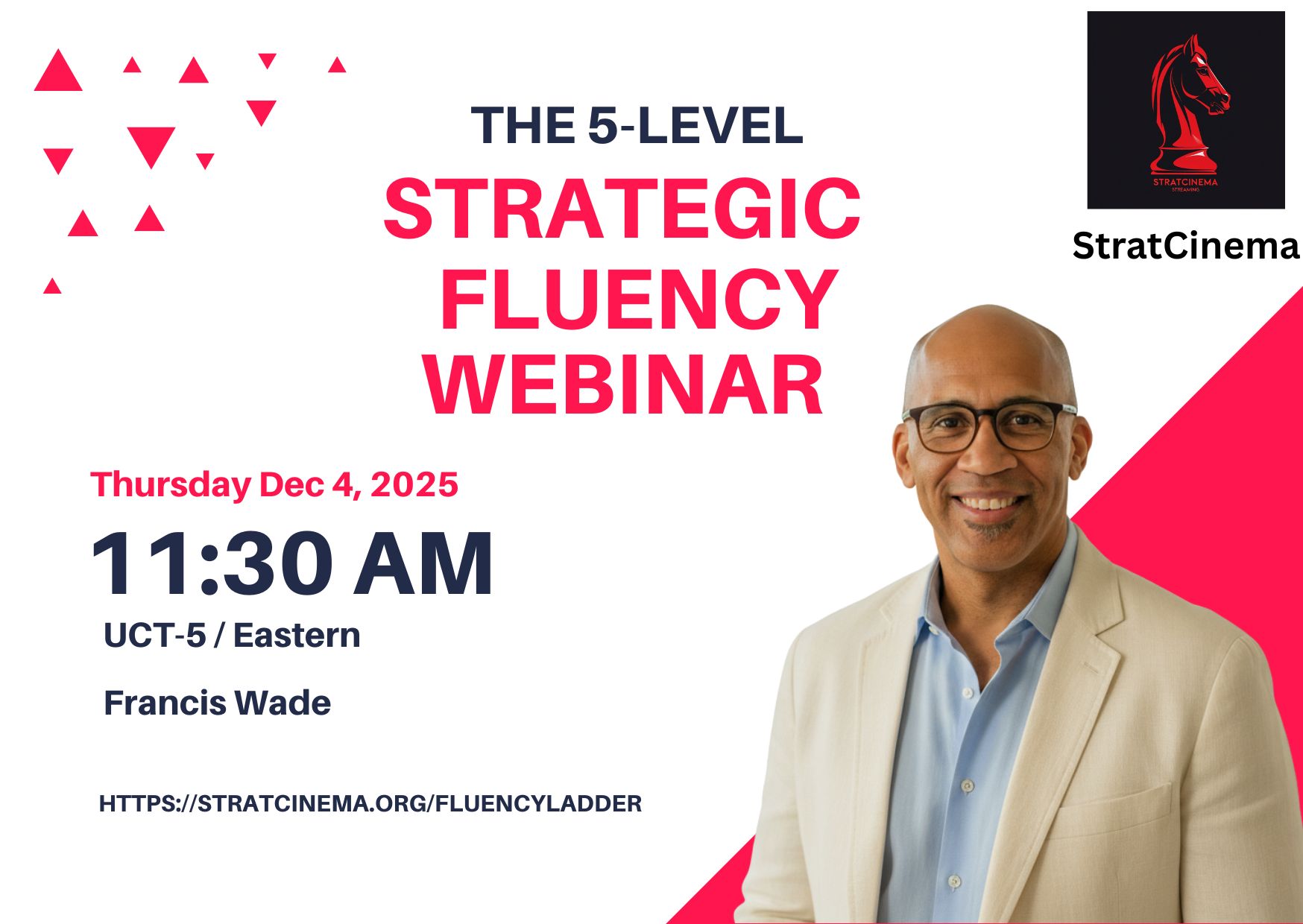
The 5-Level Strategic Fluency Ladder

The 5-Level Strategic Fluency Ladder

1 h : 8 min
Most professionals plateau at strategic mediocrity without realizing it. Francis Wade reveals the five-level Strategic Fluency Ladder that separates executives who merely use strategy vocabulary from those who genuinely think strategically. Discover why reading business books and attending workshops doesn't automatically translate to strategic capability—and how to diagnose your actual fluency level. Level One strategists can't distinguish strategy from tactics. Level Three executives confidently discuss frameworks but struggle with real-world application. Level Five leaders seamlessly integrate strategic thinking into daily decisions, spotting patterns others miss. Wade exposes the dangerous illusion where vocabulary mastery masks conceptual weakness—people sound strategic without being strategic. Learn the self-assessment framework for identifying your current level, understanding why most organizations operate between Levels Two and Three, and discovering the specific practices required to advance. Essential viewing for anyone who suspects their strategic capabilities don't match their strategic responsibilities. 00:00:00 Strategic fluency defined: ability to think strategically versus merely discussing strategy using borrowed vocabulary without comprehension 00:08:45 Level One characteristics: cannot distinguish strategy from tactics, confuses operational planning with strategic thinking entirely 00:18:32 Level Three trap: confidently discusses frameworks and concepts but struggles applying them to novel business situations 00:32:15 Assessment framework: self-diagnosis questions reveal gap between perceived strategic competence and actual strategic fluency level 00:45:20 Advancement practices: specific exercises for moving up ladder including case comparisons, pattern recognition, framework interrogation
Navigating Innovation and Creating an Invincible Company

Navigating Innovation and Creating an Invincible Company

37 min
Innovation coach reveals why most companies waste years building products nobody wants. Nick Himowicz unpacks the "Kill Your Startup in 90 Minutes" workshop—designed to destroy bad ideas before they drain resources. The core problem: founders spend months on product development without proper customer interviews, then sweat through desperate validation pitches asking "please tell us you like it." Discover why The Invincible Company redefines innovation as R&D (optional) + Business R&D + Execution—Steve Jobs didn't invent the mouse, he excelled at customer value and business models. Learn the visual framework that forces founders to extract messy mental models onto paper, eliminating "blah blah blah" conversations that camouflage flawed assumptions. Case study: Simples built a €10M portfolio in Moldova by solving local needs ignored by Google and Amazon, then scaling globally with underwater swimming tech. Their strategy proves you can explore new markets while exploiting current businesses—the portfolio approach to invincibility. 00:00:26 Kill startup in 90 minutes: prefer destroying ideas fast versus wasting three years, thousands of pounds 00:12:03 Invincible company visual: most companies start and stop quickly, goal is continuous survival beyond scale 00:15:01 Innovation redefined: R&D optional, business R&D non-negotiable—customer value plus business model plus execution 00:17:24 Customer interview failures: founders spend years building, then desperately pitch hoping for validation under pressure 00:28:33 Simples case study: €10M Moldova portfolio solving local needs, became explorers scaling globally with underwater tech
Hard to Engage Staff on Vision/Strategy? In Your Sleep w/AI

Hard to Engage Staff on Vision/Strategy? In Your Sleep w/AI

36 min
Strategy dies in the gap between communication and activation. Two strategy consultants reveal why traditional approaches—town halls, PowerPoint decks, cascading KPIs—leave employees with metrics but no context for daily decisions. The problem isn't that CEOs don't communicate enough; it's that strategy never becomes alive in the minds of frontline workers making real trade-offs. Amy unveils ContextUM, an AI tool that walks CEOs through interactive strategy mapping, extracts principles through dialogue, then enables employees to query strategic dilemmas in real-time. Sales rep facing a contract decision at midnight? The AI applies strategy principles to help navigate the choice. Francis demonstrates NotebookLM integration—transforming strategy documents, transcripts, and interviews into interrogable knowledge bases where employees ask "what does this mean for my job?" Both approaches surface critical insight: AI is terrible at independent research but brilliant at extracting principles from human-provided truth. The breakthrough isn't AI replacing strategists—it's AI activating strategy through people, creating feedback loops that surface outdated assumptions before they kill execution. 00:02:24 Core problem redefined: not communication failure but activation gap where strategy becomes memory instead of living context 00:08:28 Why talking doesn't activate: one-way information delivery versus strategy as context for moment-by-moment employee decisions 00:16:30 ContextUM prototype: interactive CEO onboarding extracts principles, employees query real dilemmas, dashboard surfaces recurring strategic tensions 00:22:06 NotebookLM approach: strategy sources become interrogable environment, employees ask unlimited questions, surface outdated assumptions upward 00:33:03 Critical AI limitation: terrible at independent competitor research, expert at extracting principles from human-provided strategic truth
The Commoncog Method Used by StratCinema

The Commoncog Method Used by StratCinema

13 min
Warren Buffett's secret teaching method revealed—how he transformed Katherine Graham from self-described "doormat wife" into legendary CEO delivering 22.3% compound annual returns over 28 years. The technique: calibration case method using antique financial statements. Buffett collected annual reports like others collect cars, organizing them by business concepts in his mind. Each board visit, he'd walk Graham through comparisons—this company healthy in year one, struggling ten years later, why? That company thriving over the same period, what's different? Constant pattern matching across time and circumstance. The method works because business is an "ill-structured domain"—concepts like competitive advantage appear uniquely each time. Experts don't reason from frameworks; they compare fragments of cases they've seen before. Novices cling to one example and MBA frameworks. Masters collect minimum ten cases per concept and never stop seeking new patterns. Military research proves this accelerates expertise in complex domains where no two situations repeat exactly. 00:01:36 Buffett's teaching ritual: brought annual reports each visit, walked Graham through with pencil comparing business snapshots 00:04:10 Calibration case method: collect minimum ten cases per concept, compare every new case against known examples 00:06:28 Why it works: business is ill-structured domain where concepts appear uniquely, frameworks insufficient for pattern matching 00:10:23 Expert behavior: rapid case comparisons with fragments, never assume simple explanations, constantly seek new cases 00:11:49 Buffett after decades still assumes he hasn't seen everything, forever collecting cases to sharpen pattern recognition
Seeing What's Next: Using Theories of Innovation to Predict

Seeing What's Next: Using Theories of Innovation to Predict

1 h : 7 min
Clayton Christensen's protégé reveals how theory transforms guesswork into foresight. Scott D. Anthony unpacks the frameworks from "Seeing What's Next"—showing why Western Union dismissed Bell's telephone as a toy, why Tesla confounds traditional disruption theory, and how law firms are being dismantled despite record profits today. The core revelation: good theory requires just two elements—getting categories right and understanding causality. When customers become overshot, margins plateau, and loyalty declines, disruption becomes inevitable. Yet incumbents rationally make every wrong decision because their resources, processes, and values optimize for yesterday's game. Discover the tale of the tape for predicting competitive outcomes, why Netflix hid behind Blockbuster's asymmetric motivations, and how Amazon's cloud computing started as an internal IT problem. Learn to spot early warning signals before the tsunami hits—when your best customers start experimenting, when venture capital floods adjacent markets, when profitability rises as disruption accelerates. Essential frameworks for seeing around corners when data doesn't exist yet and the future demands different lenses than the past provided. 00:08:13 Good theory requires two elements: getting categories right and understanding causality between circumstances and results 00:16:34 Western Union missed telephone because every incremental decision optimized existing business—looked right until too late 00:22:09 Overshoot occurs when solutions exceed needs; undershoot when problems remain unsolved; determines competitive strategy entirely 00:38:50 Early warning signals: margins plateau, price premiums decline, loyalty drops, customers experiment—all visible before crisis 00:54:05 Tale of tape predicts winners: analyze resources/processes/values, asymmetric motivations create shield, capabilities build sword
The Dawn and Dusk of Sun Microsystems

The Dawn and Dusk of Sun Microsystems

19 min
Sun Microsystems rode open standards from garage startup to $140 billion titan—then burned out spectacularly. This cautionary tale reveals how yesterday's innovation advantage becomes tomorrow's execution anchor. Watch Andy Bechtolsheim's Stanford workstation project explode into a billion-dollar company by leveraging off-the-shelf parts, Berkeley Unix, and network protocols that competitors couldn't match. The brilliance: distributed computing when everyone else sold timeshare mainframes. The hubris: starting Unix Wars that fractured their community and opened the door for Microsoft. The fatal flaw: refusing to adapt when Linux clusters and commodity hardware demolished their vertically-integrated server empire. From profitable in month three to losing $10 billion across the 2000s, Sun's collapse teaches brutal lessons about technology lock-in, the double-edged sword of "openness," and why sharp elbows work during hypergrowth but kill you when trends shift. Perfect case study for understanding when proprietary advantages become liabilities and how attitude determines whether companies pivot or perish. 00:04:28 Workstation category: powerful personal computers for CAD work, affordable enough for prosumers to own individually 00:08:35 Open model victory: Sun 3 was 15% cheaper than Apollo, distributed file system became industry standard 00:12:04 Unix Wars opened Microsoft's door: Windows NT captured workstation market while Sun remained distracted, fragmented community 00:14:21 Vertical integration advantage: Solaris handled 100 processors versus Intel's four, perfect for emerging internet server market 00:17:16 Open source killed them: Linux clusters with commodity hardware annihilated Sun's high-margin Enterprise server business
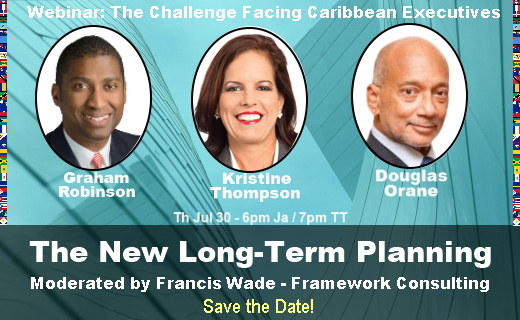
The New Long-Term Planning in the Caribbean

The New Long-Term Planning in the Caribbean

1 h : 46 min
Three Caribbean CEOs reveal how visionary companies balance survival today with winning tomorrow. Douglas Orane unpacks Grace Kennedy's legendary 2020 Vision—a 25-year strategic plan launched in 1996 that transformed a struggling Jamaican conglomerate into a global consumer group worth $533M. See how doubling productivity, building owned brands, and targeting the diaspora created compound advantages competitors couldn't replicate. Christine Thompson shares Chuck E. Cheese's brutal pivot during COVID—converting fixed costs to variable, negotiating percentage-based rent, and maintaining brand presence while revenue collapsed 85%. Discover how high-touch entertainment businesses survive when social gathering becomes the enemy. Graham Robinson demonstrates planning for today, tomorrow, and the future simultaneously at Stanley Black & Decker. Learn the 80/20 operating system, why spans and layers flatten in remote work, and how to invest for growth while restructuring for cost. Essential frameworks for navigating economic aftershocks while planting seeds for recovery. 00:10:40 Grace Kennedy's 2020 Vision: four drivers including developing people, owning brands, growing internationally, doubling productivity 00:24:25 Chuck E. Cheese survival strategy: restructured P&L with variable costs, percentage-revenue rent, value propositions during fear 00:39:41 Long-term evidence: companies embracing 15+ year strategies grew revenue 4-7% more, earned 36% higher profits 00:46:32 Planning framework: 80/20 principle for today, adjacencies for tomorrow, services transformation for future at scale 01:40:40 Grace Kennedy results: $36M to $533M market value, 300M to 768M revenue over 25 years
Why Strategy Documents Lack Insights

Why Strategy Documents Lack Insights

45 min
🚀 Tired of generic, uninspiring strategic plans that go nowhere? Most companies fill out strategy templates year after year—only to end up with the same mediocre results. Why? Because real strategy requires deep insights, not just checklists. In this session, Chris Fox — a seasoned strategy consultant with 25+ years of experience—reveals why most strategic plans fail and how to replace empty templates with AI-powered curiosity loops that generate game-changing insights. 🔍 You’ll learn:Why most "strategic plans" are just glorified to-do lists (and how to spot the difference) The #1 mistake leaders make when brainstorming (hint: they skip the most critical step) How companies like Apple and Amazon use insights to drive breakthrough strategies Why AI is the missing link in modern strategy (and how to use it without outsourcing your thinking) A step-by-step method to turn vague ideas into executable, insight-driven strategies 🔗 Connect with Chris Fox:   / chriscfox   | https://www.stratnavapp.com/ ------- ⏱ Key Chapters: 00:00 - The Problem: Why Most Strategy Docs Are Useless 02:16 - The "Last Year + 10%" Trap (And How to Escape It) 07:38 - Why Brainstorming Alone Fails (And What to Do Instead) 12:45 - How Apple & Amazon Use Insights to Win 18:30 - The Role of AI in Modern Strategy (Beyond Just Automation) 25:10 - How to Build an "Insight Machine" in Your Company 32:50 - Case Study: Turning a Failing Strategy Into a Breakthrough 40:15 - Final Takeaways: How to Stay Ahead in Any Industry
The Rise and Sad Fall of Wang Labs

The Rise and Sad Fall of Wang Labs

29 min

📉 The Rise and Tragic Fall of Wang Laboratories


Description


This video details the remarkable entrepreneurial journey and subsequent collapse of Wang Laboratories, founded by the brilliant Chinese immigrant engineer An Wang. The company rose to prominence on the strength of Wang's singular genius, from patenting core memory technology to successfully transitioning from calculators to pioneering word processing systems (WPS) and mini-computers in the 1970s. At its peak, Wang Labs was a Fortune 500 powerhouse, dominating the office automation market. However, the video attributes the company's downfall in the mid-1980s to two critical errors: An Wang's failure to recognize the importance of the IBM PC Revolution and his insistence on appointing his inexperienced son, Fred Wang, to run R&D and later the presidency. This combination of missed technological shifts and chaotic succession led to product delays, internal turmoil, massive financial losses, and ultimately, bankruptcy in 1992, just two years after An Wang's death.


5 Key Moments and Timestamps

 
  • 0:04:39: The Invention of Core Memory - While working at Harvard, An Wang invented the foundational concept for magnetic core memory (an ancestor of RAM) by realizing data could be read and immediately rewritten. He received a patent for this, which he later sold to IBM in 1955 for a crucial $400,000–$500,000 ($4.4M–$5.5M today), providing the seed money to move from consulting to product development.

  • 0:12:01: The Calculator Success and Pivot - Wang Labs' first major hit was the Wang 300 calculator (1966), which sold extremely well on Wall Street and helped the company go public in 1967. However, realizing microprocessors would soon commoditize the market, An Wang made the "incredibly ballsy decision" to pull out of the calculator market in 1971 to focus entirely on computers.

  • 0:17:19: Dominance with Word Processing - After a failed initial attempt, Wang released the redesigned Wang Word Processing System (WPS) in 1976. It was an immediate hit due to its power, upgradability, and ease of use (ditching IBM's Selectric and using a CRT screen), quickly making Wang the world's largest supplier of CRT-based word processing systems by the late 1970s.

  • 0:19:20: Reaching the Peak - In 1978, Wang launched a massive ad campaign, culminating in a Super Bowl ad directly attacking IBM, which boosted public awareness from 3% to 14%. Sales reached $1 billion in 1982 and $2 billion in 1984. An Wang's stake peaked at over $1.6 billion in 1984, making him the richest man in New England.

  • 0:24:00: The Fatal Misjudgment - An Wang resisted the PC, believing it was a "dead end commodity" like the calculator. This led him to miss the IBM PC Revolution. Coupled with his decision to install his inexperienced son Fred Wang in critical leadership roles, the company was unable to put out competitive products, leading to a massive 66% quarterly profit decline in 1985 and the beginning of the end.

Ep 32 - From Idea Overload to Execution - A Strategists Guide to Prioritisation
1 h : 21 min
The 5-Level Strategic Fluency Ladder
1 h : 8 min
Navigating Innovation and Creating an Invincible Company
37 min
Hard to Engage Staff on Vision/Strategy? In Your Sleep w/AI
36 min
The Commoncog Method Used by StratCinema
13 min
Seeing What's Next: Using Theories of Innovation to Predict
1 h : 7 min
The Dawn and Dusk of Sun Microsystems
19 min
The New Long-Term Planning in the Caribbean
1 h : 46 min
Why Strategy Documents Lack Insights
45 min
The Rise and Sad Fall of Wang Labs
29 min

Jump-Leap Long-Term Strategy Podcast

jump leap 3 trans png
1h : 00m

Recent Episode

Let’s imagine for a moment that you are a citizen or resident of the USA. You love the country and especially the vision of the founding fathers. However, you are distressed by the degree of the political divide. It has hijacked popular attention. People seem to hate each other. Is there a way to find inspiration beyond the current uncertainty? Can leaders possibly come together if only they took a long-term view of the country, and the world?